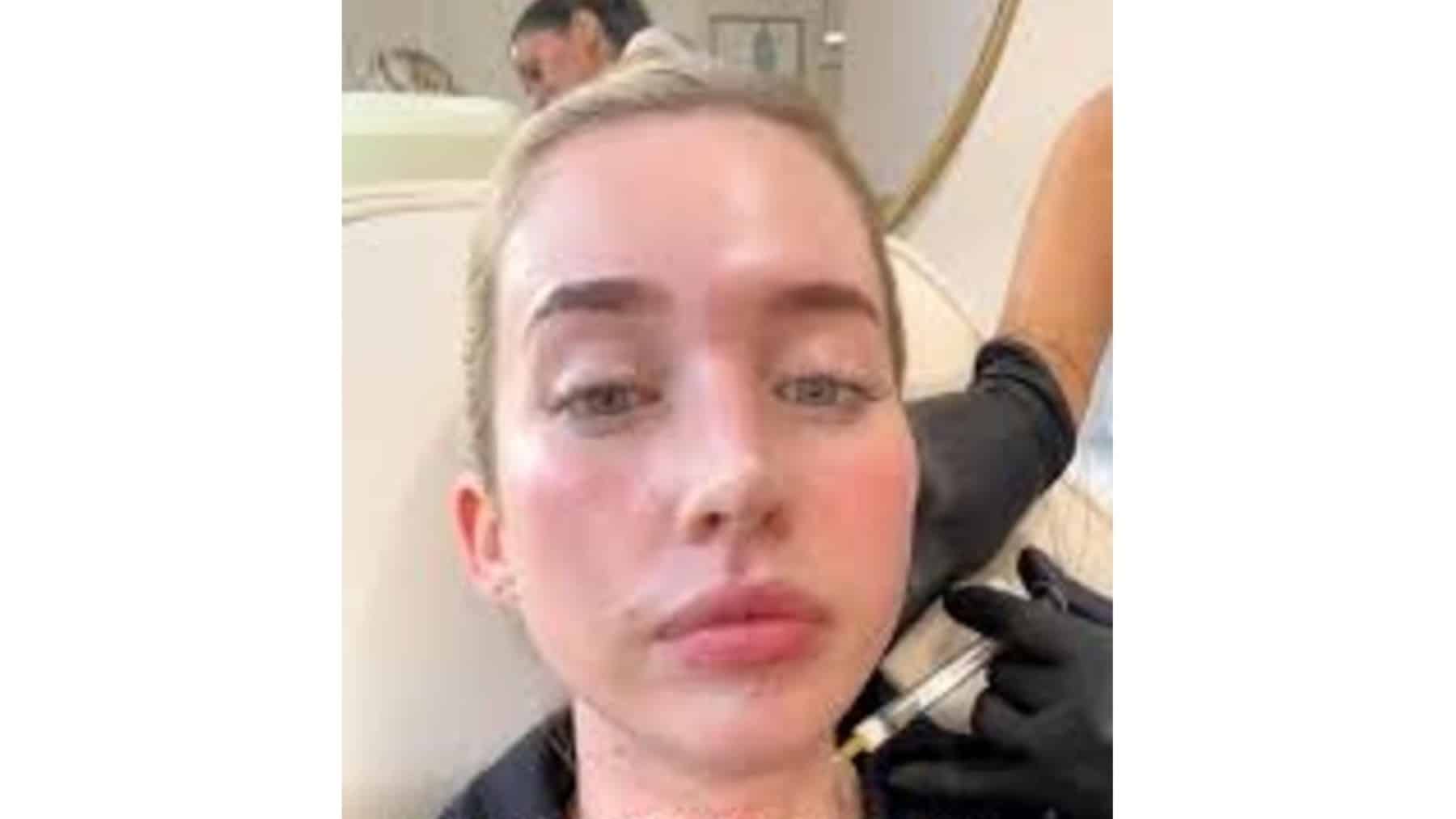
In the world of cosmetic surgery, facelifts are the latest trend among people who want to have cosmetic work done. In fact, celebrities such as Kris Jenner, Catt Sadler, Marc Jacobs, and Caroline Stanbury have joined this latest cosmetic trend. Below, we present the case of Emily, a young woman who went to Turkey to have a facelift. According to Julia Gilando and Nora Nugent, president of the British Association of Aesthetic Plastic Surgeons (BAAPS), along with professionals such as Simon Lee and Alexis Verpaele, they highlight the increase in cosmetic enhancements in the United Kingdom, with Botox use on the rise. Likewise, the American Society of Plastic Surgeons and the University of West England report that Generation X is also embracing these procedures. Read on to learn more.
Social media shows the reality of cosmetic surgery
A quick search on social media and my feed is flooded with posts from people in their twenties and thirties talking about different types of facelifts: mini, ponytail, deep plane.
Gone are the days when facelifts were reserved for wealthy seniors: now a growing number of younger people are choosing to go under the knife.
Some happily share before-and-after photos of their faces. They also share the in-between stage: their often very painful recovery, during which they appear bruised and swollen. It is no longer a procedure that is talked about in secret; celebrities such as Kris Jenner, Catt Sadler, and Marc Jacobs have spoken openly about their treatment. Rumor has it that many more celebrities have undergone these treatments.
Facelifts are often seen as a last resort, the most significant of cosmetic surgeries.
Have people become so insecure in this digital world full of falsehoods that they are willing to pay thousands of dollars for this operation? Or have non-surgical treatments, such as Botox and fillers, become so widespread that having the skin separated from the cheekbones and the facial tissues and fat rearranged is perceived as a logical and longer-lasting next step?
Emily’s case: a simple “stylized look”
For Emily, who underwent a facelift at age 28, it was all about achieving a “stylized look”: a sculpted, sharp jawline, high cheekbones, and what many young people refer to as fox eyes.
She says that having surgery in Turkey has been “life-changing” and she has no regrets.
“In total, I had six surgeries combined into one,” she explains. “Among them, I had a mid-face lift, a lip lift, and a rhinoplasty [nose surgery].”
Describing the process, the Toronto, Canada-based entrepreneur says the surgeon played her favorite song while she was under general anesthesia, and then, “I fell asleep and woke up, threw up, and had a new face and nose.”
The recovery process was long: the pain and bruising began to subside during the first few weeks, but it took Emily six months to regain feeling in some parts of her cheeks. Would she do it again? She hesitates.
“Since my surgery, I’ve changed my life. I’m healthier, I drink a lot less, I take care of my skin, I sleep. I think if I knew what I know now, I might not have done it.”
“My mom didn’t even know until I told her a couple of days after the surgery.”
A changing profile
Figures from the British Association of Aesthetic Plastic Surgeons (BAAPS) show an 8% increase in facelifts over the last 12 months in the UK. While they do not break down the figures by age, many surgeons report that the demographic profile is changing.
The same is true in other parts of the world. The American Society of Plastic Surgeons has seen an increase in Generation Xers (ages 45 to 60) opting for facelifts.
Nora Nugent, president of BAAPS, believes there are a number of reasons for this shift, including the rise of weight-loss drugs.
However, a facelift is still a major operation that should only be performed by a registered specialist plastic surgeon in a registered center with the appropriate equipment, she says. At his clinic in Bristol, plastic surgeon Simon Lee has performed hundreds of facelifts and shows me a video of one.
During the procedure, the client is fully awake, as low levels of local anesthesia have been injected into the skin and deeper underlying tissue.
He makes a series of small incisions in her face before going under the skin, fat, and superficial fascia—the part of the face that controls our expressions—and then reaching the deep plane where he repositions tissue and muscles to reshape the face.
As he finishes, the client, who has been under the knife for four hours, smiles with relief.
Simon Lee says that one of the reasons this surgery has become more appealing is the ease with which face and neck lifts can now be performed. Previously reserved for a hospital operating room and requiring general anesthesia, he can now perform facelifts without sedation in his clinic.
He says it is an “exciting time” in a rapidly developing industry. While the classic facelift—which focuses on the lower jaw and neck—remains popular, there are newer treatments that target the upper two-thirds of the face, where, he says, the aging process begins and is noticeable at a younger age.
The surgeon qualifies this by saying that a facelift is suitable for people over 40, but it would be very unusual to perform such a complex procedure on someone in their twenties or thirties.
There are risks and complications associated with this type of procedure, such as developing a hematoma (an accumulation of blood under the skin that, if left untreated, could lead to necrosis or death of the surrounding tissue), infections, nerve damage, and alopecia.
A facelift costs, on average, between $20,000 and $60,000 in the United Kingdom, although there are clinics that offer these procedures for as little as $6,660.
Experts say it is important to do your research and choose a plastic surgeon who specializes in facelifts.