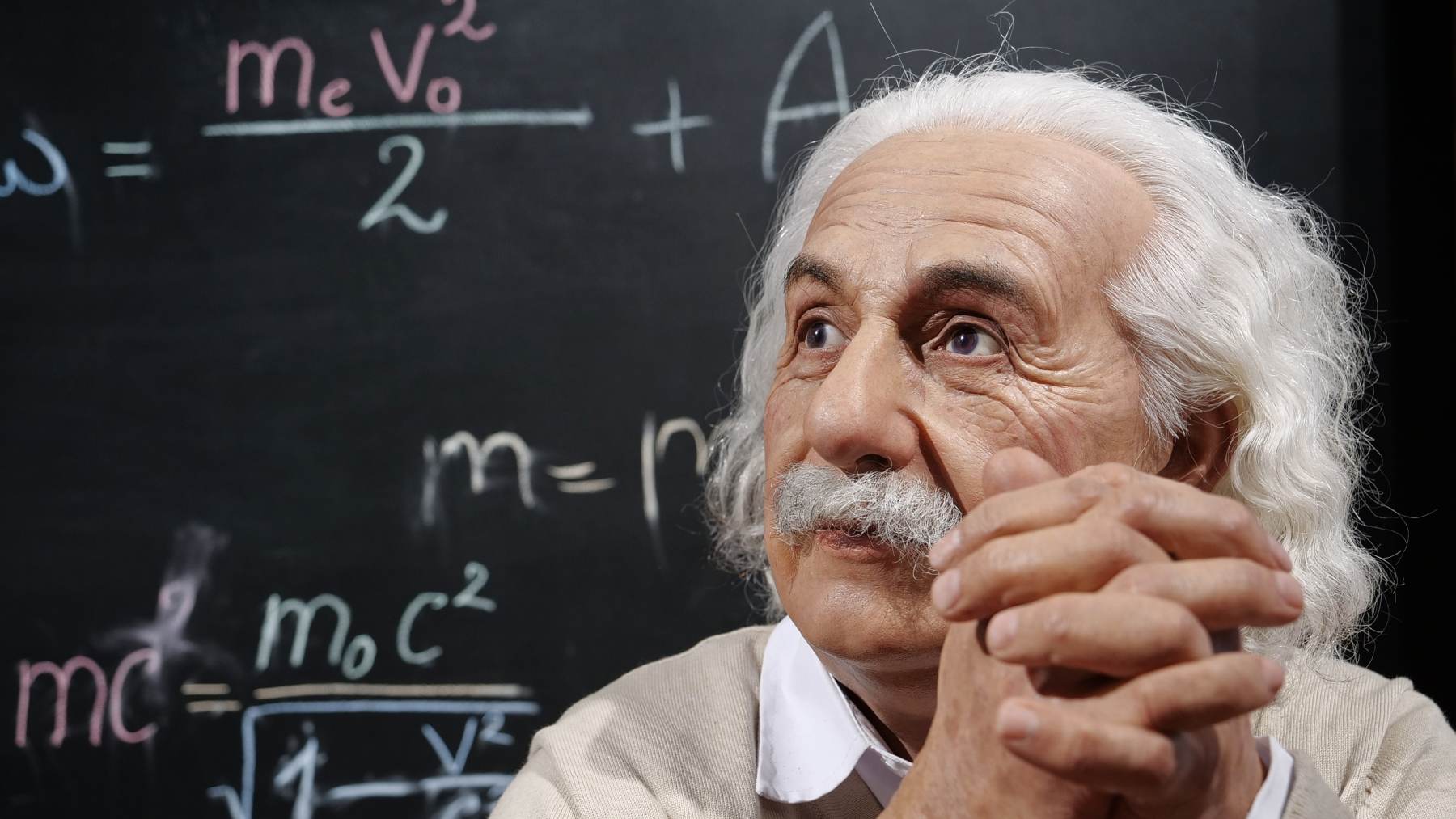
Albert Einstein’s enormous and diverse brain is the reason he has been able to transcend the history books. Einstein created the theory of relativity, whose equation of equivalence between mass and energy (E=mc2) is among the most well-known in science, and proved the photoelectric effect, for which he received the Nobel Prize in 1921. However, he needed to be rescued more than thirty times to keep him from dying in the waters near New York, indicating that his sailing abilities were lacking.
Einstein had to be rescued several times while sailing in New York
Einstein is also recognized for many well-known quotes that address everything from political difficulties to matters pertaining to human nature. The ten that we felt were the most surprising or pertinent are included in this article. Now, one of the lines that few people would link with the physicist prodigy is about sailing, one of his hobbies: “My navigational strategy is to set sail quickly, without considering energy or speed, then to relax and allow the ship to float.” It’s almost comical that a theoretical physicist with research that has been essential to our current understanding of the world would have such an odd perspective on sailing. In order to navigate the waters in this sport, sailors use the principles of physics.
Through the calculation of sail angles and wind direction and strength, the boats are able to accomplish amazing feats of skill that allow them to control and utilize the forces of nature as they see fit. On the other hand, the physics genius just let himself go on his ship, Tinef. He did have some navigational ideas, to be sure, but other sailors in the harbor of Cutchogue, east of New York, said he was a far better scientist than a sailor. According to a New York Times report by local merchant Robert Rothmann, over thirty people claimed to have rescued Einstein from the seas at some point because he had run aground or, more specifically, because he had capsized and was unable to return to shore.
When the scientist was still residing in Caputh, Germany, in 1929, neighbors from high society bought him a boat called the Tümmler “Purpose” for his fiftieth birthday, which made him very happy. In a letter to Einstein’s sister Maja, his wife, Elsa, wrote, “Our sailboat is fabulous; Albert has his own jetty in the garden, and he loves the joy of sailing very much.” The sailboat was given to me by some really wealthy friends for fifteen thousand marks. To help you visualize the wonderful vessel your brother is sailing on, I make this arrogant statement.
Unfortunately, he would have to leave the country just three years later as a result of the development of Nazism, as the Nazi party had listed him as a danger to the nation. But he did everything he could to save his ship from coming into the hands of the Prussian police and then the Gestapo, even though this meant abandoning it. To achieve this, he got in touch with a friend of his, Hermann Schumann, to inquire about the possibility of bringing his sailboat to the Netherlands prior to its confiscation. Since the journey would have endangered Schumann’s life, he was unable to grant Einstein’s wish.
What happened with Einstein’s boat?
Professor Einstein’s motorboat, worth RM 25,000, was taken and seized by the Reich. The boat was moored in Caputh, near Potsdam, and was thought to be used to conceal Einstein’s plot to sneak the sailboat into another nation. A countdown started with this announcement, in addition to attempting to harm Einstein’s reputation. When the authorities seize a car in these situations, it eventually goes up for public auction if it is not utilized for a long time. Before being sold for 1300 marks in May 1934, the Tümmler was inactive for over a year. Following the sale, it continued to operate in German waters.
Einstein wrote to Caputh in 1945, at the end of the war, to inquire about the ship’s location. It wasn’t until the late 1930s that the authorities and community members were able to locate Tümmler, despite their best efforts. The path was lost when the conflict started, and thus it has been until today. As a result, the Tinef—a name that has occasionally been translated from Yiddish as a substitute that is inferior to the original—was his final ship. Naturally, his contributions to physics are more well-known than this aspect of Einstein’s life at sea, but they still serve to humanize the genius.