
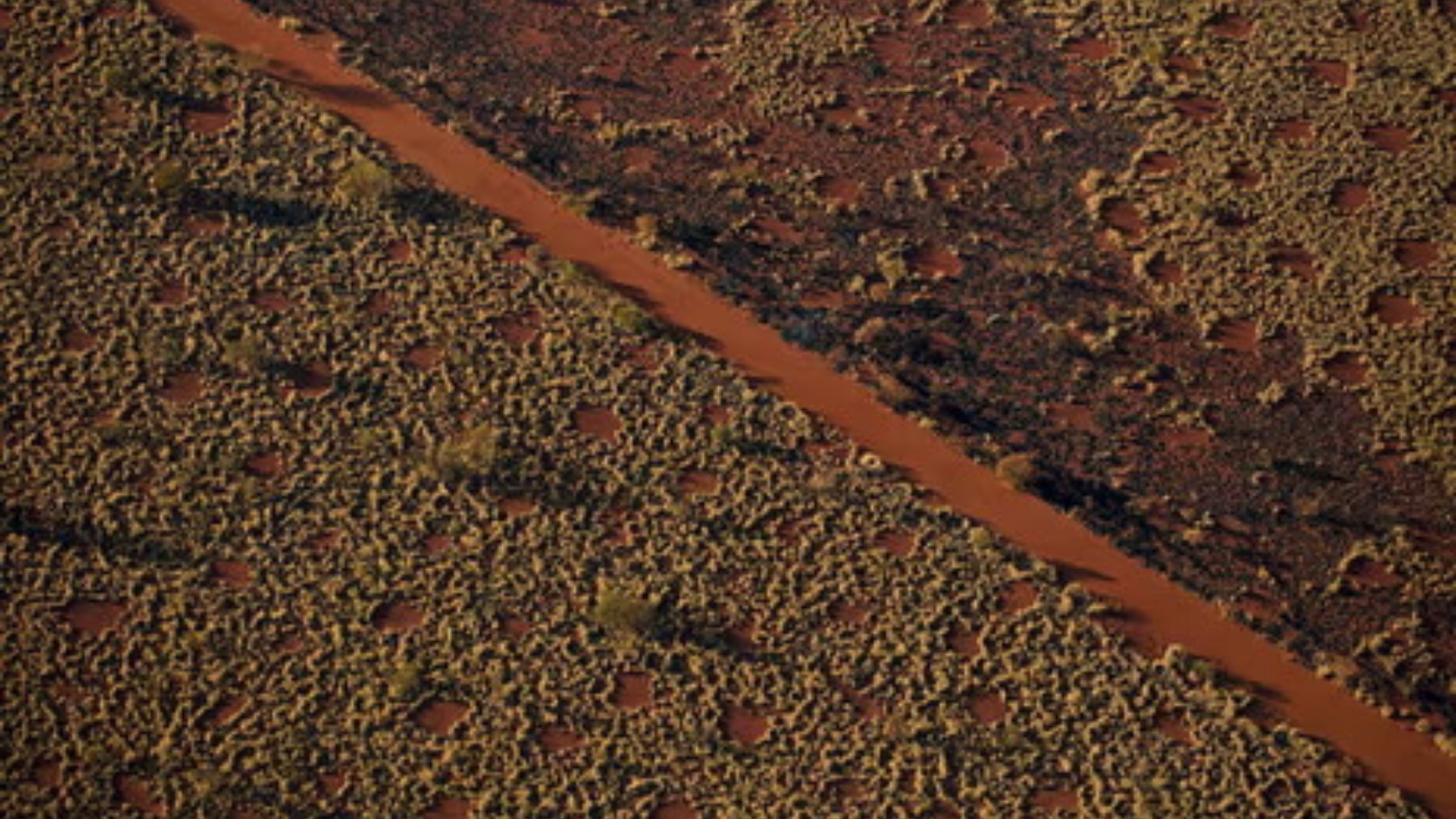
One of the natural phenomena not yet explained 100% accurately by researchers is the appearance of what they call fairy circles. These are circles that appear on the soil of arid ecosystems, with a pattern and size more or less defined. It was believed to be an exclusive phenomenon of Namibia, in Africa, and Australia, but the truth is that it has also been found in other locations. There are many scientists who devote their studies to understanding soil science, although no clear answer has yet been given to this phenomenon.
Fairy circles
Do you know the shape of the sand produced by a drop of water when it falls? Well, that´s how the fairy circles can be (more or less), described. With a very large size, this phenomenon was believed to be unique in the central areas of Australia and Nambia, in Africa. However, the latest studies have revealed that they are found in many other areas of the planet. The latest study carried out indicates that there is a possibility of fairy circles can be found in more than 15 countries around the world!
New studies
AI has been the key element in the latest research into fairy circles. Dr. Emilio Guirado, data scientist at the Multidisciplinary Institute of Environmental Studies at the University of Alicante, Spain, stated: “The use of artificial intelligence-based models from satellite imagery is the first time that it has been done on a large scale to detect patterns such as fairy circles”.
First, scientists sent the AI 15,000 satellite images of Nambia and Australia, where there were equal parts, with and without fairy circles. When AI learned to discern them, data corresponding to 575,000 plots of one hectare from different areas of the planet was added, with the purpose of discarding where not and selecting where it identified the same pattern of circles. However, according to Guirado, they had to review the selection manually to check its reliability.
Results
Following the survey, 15 new countries from 3 different continents have been added to the list. Countries sharing climate and arid soils such as the Horn of Africa, Madagascar, Central and Eastern Asia and many more. This opens up a new avenue of research in search of answers to the origin of fairy circles.
Circle patterns
According to Dr. Stephan Getzin, a researcher in the department of ecosystem modeling at Göttingen University in Germany, the formation of circles is not unique to fairy circles, but they do have a pattern that distinguishes them. He declared that “Fairy circles are defined by the fact that they have the ability to form a ‘spatially periodic’ pattern,” which is “significantly more orderly” than other patterns – and none of the patterns in the survey makes that high bar clear”.
He does not entirely agree with the results of this latest study, as his team concludes that there is a pattern and size in the formation of fairy circles and that they can be identified in circles at different times in history. However, he does not seem to appreciate this pattern in new discoveries. Except in the case of Australia, where Dr Walsh states that if there is some similarity between patterns with existing circles in that region.
What causes them?
The origin of make-up circles is not at all clear. Although their characteristics are defined, no agreement has been reached on who or what is responsible. On the one hand, Getzin argues that the union of certain climatic conditions with the organization of plants would be responsible for the appearance of circles in Nambia. On the other hand, Dr Walsh argues that they are related to termite activity. It goes back to the indigenous peoples who already knew this phenomenon and focuses on the relationship between grass, soil and termites.
Although it is not yet possible to say with certainty what the origin of this phenomenon is, there is evidence that it represents an advantage for the ecosystems in the area, so we will have to wait for future research and conclusions.
Want to know which other discoveries have been made?




