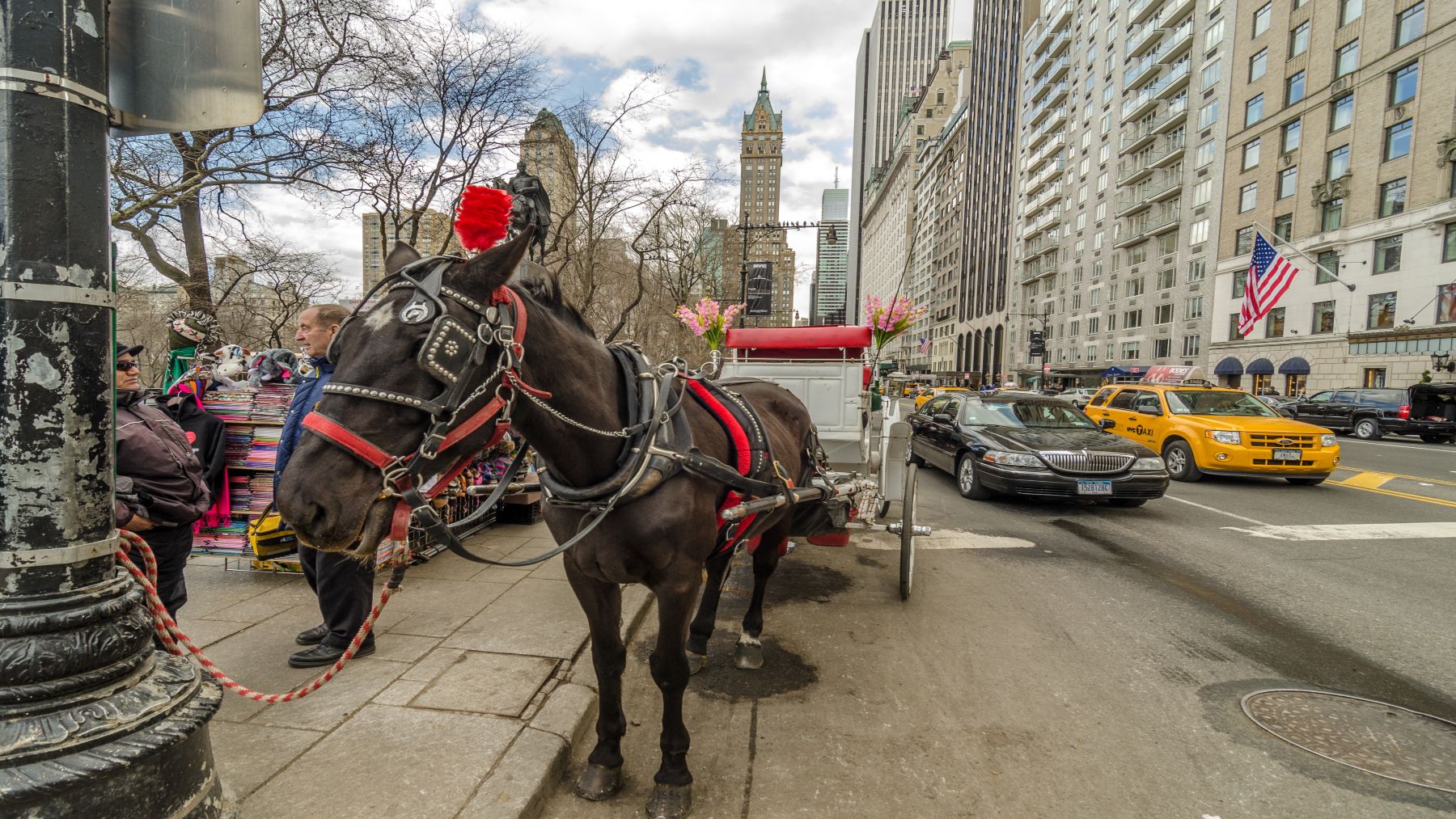
Not only in the United States, the problem with horse-drawn carriages is leading to the removal of this type of tourist entertainment from the streets of major cities. Recently, Mayor Eric Adams expressed his support for a proposal that would eliminate these carriages, publicly expressing his growing concern about the risks they pose to horses and pedestrians. This is especially true given the widespread animal abuse these horses could be subjected to, a situation that is “increasingly incompatible,” according to the mayor of New York.
The Ryder Law
Specifically, it’s a proposal called the Ryder Law, which seeks to gradually phase out horse-drawn carriages and replace them with electric vehicles. “While horse-drawn carriages have long been an iconic fixture of Central Park, they are increasingly incompatible with the conditions of a modern, heavily used urban green space,” Adams said in a statement. This measure responds to a series of incidents that included the collapse and death of the horses Ryder and Lady, as well as other episodes involving escapes and accidents that injured drivers and passengers, who are mostly tourists who come to see the city that never sleeps.
Collisions, collapses, and horse deaths fuel social and political pressure against this tradition
Under the bill, the horse-drawn carriage industry would be drastically reduced by prohibiting the issuance of new licenses for their operation. “It has become abundantly clear that these horse-drawn carriages no longer work for our city,” the mayor said. The Associated Press reported that Adams has already sent the City Council a letter of necessity, authorizing lawmakers to expedite passage of a bill phasing out horse-drawn carriages.
This initiative aims to shift toward a more ecological and less violent environment. Animal exploitation is a problem that has plagued humanity for decades, which is why these measures are generally applauded. Adams said: “This is not about eliminating this tradition—it’s about honoring our traditions in a way that aligns with who we are today.” In fact, the legislation also provides incentives for drivers to voluntarily leave the industry and offers job alternatives.
Division between animal rights activists and unions
In any case, and as with almost all political measures, this one has clear detractors. John Samuelsen, president of the American Transport Workers Union, stated that the measure “betrayed the New York workers who trusted him to defend their jobs against real estate developers who want to destroy the industry just to turn those stables into skyscrapers. He should be ashamed.” The reality communicated by City Hall is that the executive order, signed by Adams, instructs municipal agencies to strengthen oversight mechanisms, establish a process for the voluntary return of licenses, and develop job relocation plans for workers in the sector.
On the other hand, animal rights activists, who cannot defend themselves, have been represented by organizations such as NYCLASS and PETA, which claim that these events demonstrate the risk to animals, drivers, pedestrians, and tourists, and are therefore demanding the permanent withdrawal of traditional carriages. “This is a measure to save the lives of people and horses,” said Edita Birnkrant, a representative of NYCLASS. The electric alternative is an option that many welcome, while others do not. The Central Park Conservancy’s support for the legislative project influenced the progress of the public debate. According to official sources, the idea is to relocate jobs and ensure that no worker is left without income.