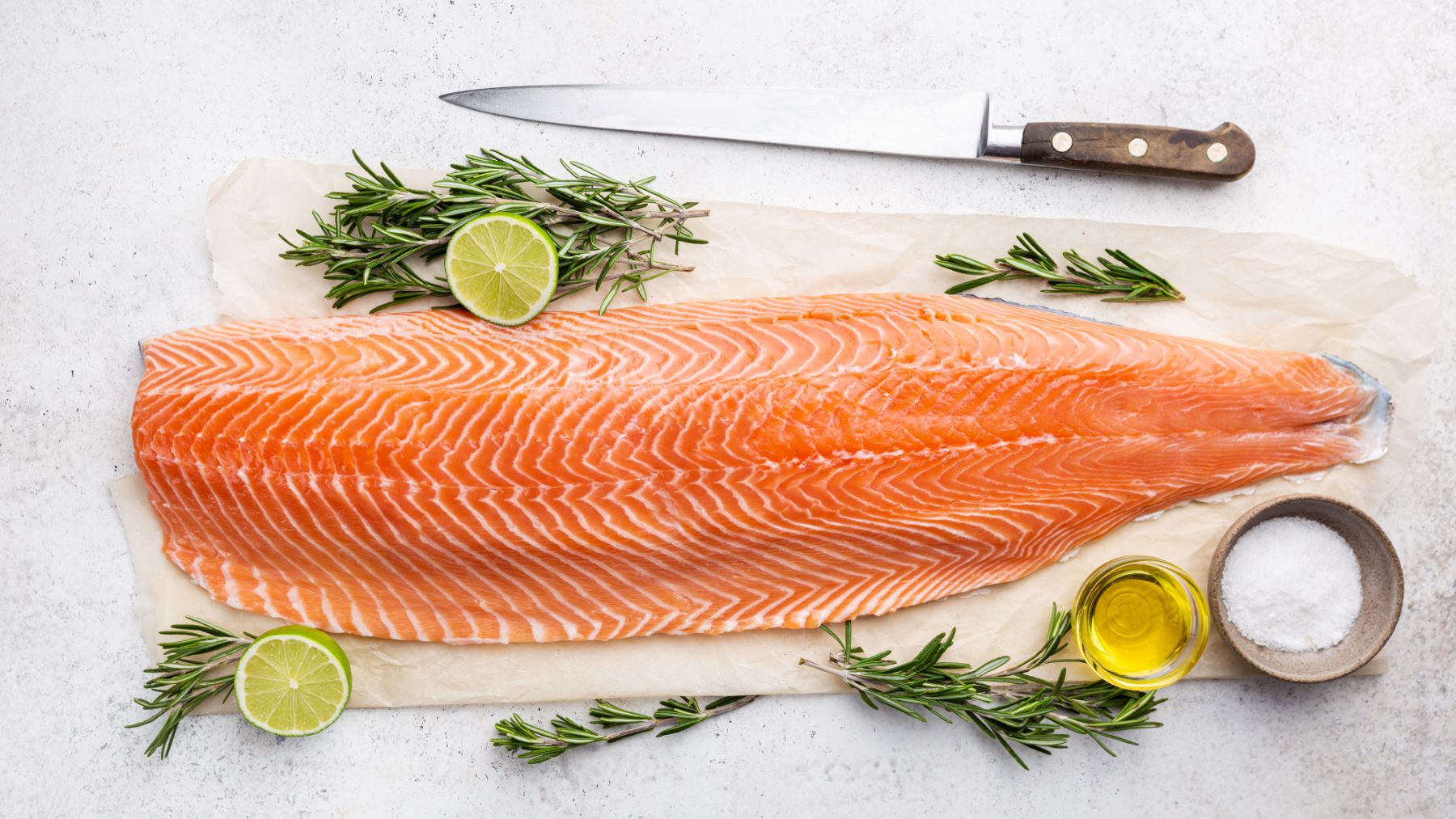
If an alien came to Earth and searched through social media to learn about our cuisines, they would think that salmon is the only fish available in the world. Orange, fleshy and vibrant, salmon is so charismatic on its own that people go out of their way to consume it raw –or smoked– to retain its vibrant color.
Salmon has become the chicken breast of fish. Realiable, tasty… and overly consumed.
It might be the poster child of healthy eating, but crack the shellac. and you find a fish raised on pesticides, occasional antibiotics, and a feed mix that nudges its fat from helpful to hazy. Farmed salmon dominates U.S. sushi bars and supermarket coolers. However, it’s not the superfood it pretends to be.
Farmed salmon: too good to be true
In open‑net pens anchored in chilly fjords or Patagonian channels, hundreds of thousands of fish circle like underwater poultry. Cramped quarters attract sea lice; tiny crustaceans that chew on salmon skin. So farmers deploy chemical baths that are strong enough to blanch a deckhand’s eyebrows.
Those drugs leave residues in flesh and slicks in coastal waters, and lice are evolving resistance, forcing heavier doses. Add in antifouling coatings on nets, and you start to see how farmed salmon collects a chemical résumé wild fish rarely share.
Salmons themselves have a poor diet
Then there’s the feed. Early farm diets relied heavily on fish oil and fish meal from wild anchovies and sardines—loaded with omega‑3s but also PCBs and dioxins that accumulated up the chain.
Industry tweaks over the past decade replaced much of that oil with soy and canola, cutting contaminants but also diluting omega‑3 density. Today a six‑ounce portion of farmed salmon can carry more total fat than before but less omega‑3 per ounce—and a higher omega‑6:omega‑3 ratio linked to inflammation. You still get useful EPA and DHA, just not the bonanza the label implies.
What about antibiotics? Norway, the global giant, boasts micro‑doses thanks to vaccines, but Chile has leaned on antibiotics heavily to manage disease. The U.S. imports from both. “Low” is not “zero,” and bacterial resistance is a planetary health issue. If your fillet’s country of origin is vague, you deserve better transparency.
Cue the ethical quandary: isn’t eating farmed salmon greener than hammering what’s left of wild runs? Sometimes. Aquaculture can spare wild stocks, but open‑net systems leak waste and escapees. Parasites spill from pens to migrating wild juveniles. Pens also consume wild forage fish—albeit fewer now than in 2005.
How to source better salmon
Meanwhile, you’ve got options. Wild Alaska salmon (sockeye, coho, pink) is sustainably managed and naturally crimson from real krill, not synthetic astaxanthin.
Sardines and Atlantic mackerel deliver more omega‑3 per ounce than farmed salmon and cost a fraction. Herring? Delicious smoked, stellar in pâté. Mussels and oysters actually clean the water they grow in. U.S.‑farmed rainbow trout and catfish, raised in regulated ponds or flow‑through systems, are mild, affordable and low‑contaminant.
If you still crave salmon’s flavor, shop smarter. Look for “Wild Alaska” on the label (it’s legally protected), or certifications like ASC (Aquaculture Stewardship Council) and BAP (Best Aquaculture Practices) that audit antibiotic and chemical use. Ask your fishmonger where the pen sat: accept Norway and Iceland, decline Chilean farmed salmon.
How to avoid the worst of farmed salmon
Trim away skin and belly fat (where fat‑soluble pollutants concentrate) and choose grilling or broiling over pan‑frying to let some fat drip away.
You don’t need to ban farmed salmon from your fridge, but you should stop treating it as default “health food.” It’s a product of intensive agriculture, with all the trade‑offs that implies. Diversifying your seafood plate takes pressure off troubled ecosystems, spreads out contaminant exposure, and broadens your culinary world.
Eat fish. Just eat it smarter —and don’t let farmed salmon be the only story on your plate.