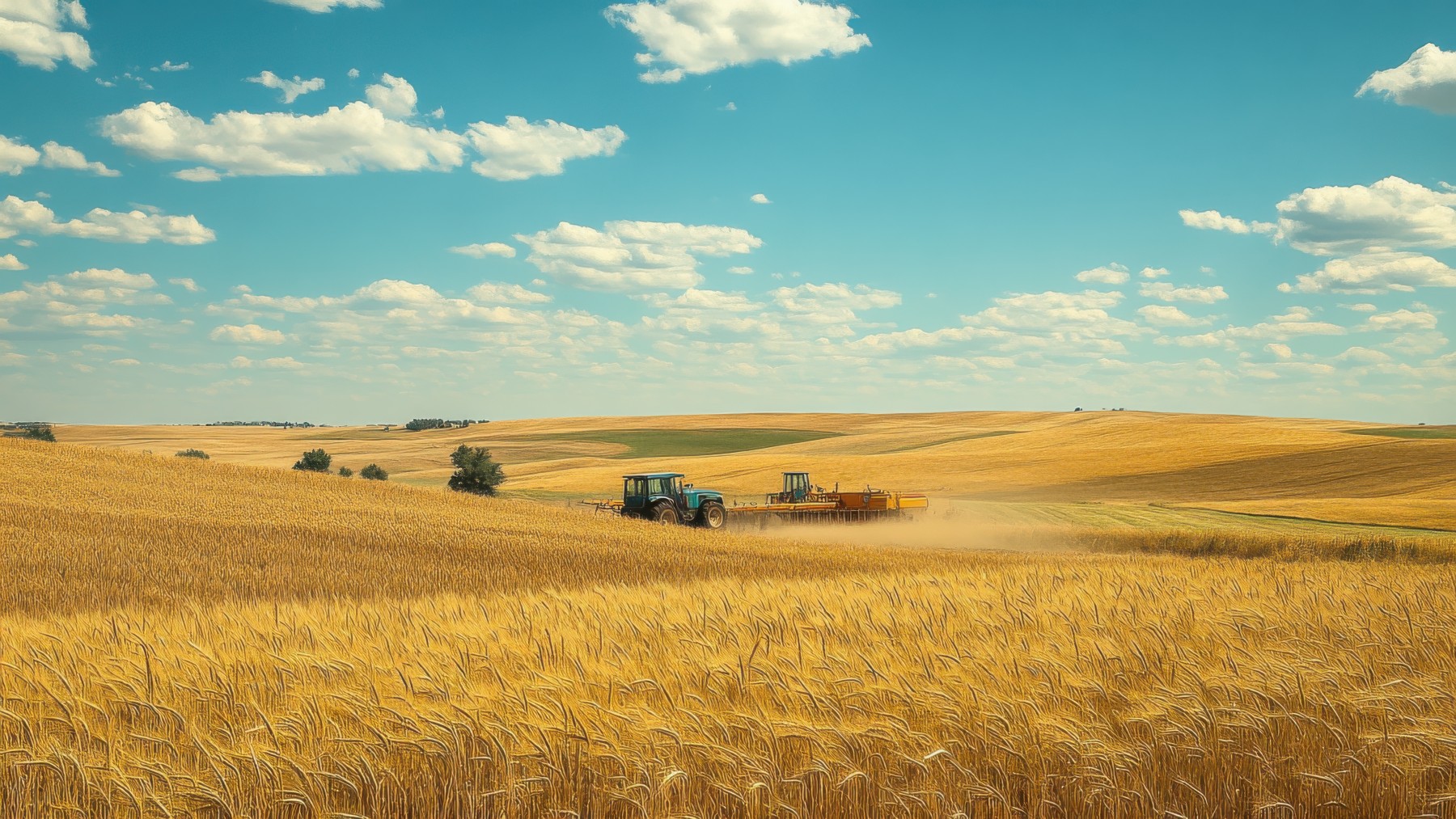
Researchers have discovered in Kansas a form of farming that may help to slow climate change to some extent. Using farmland treated with natural fertilizers, scientific research reveals a shift in farming practices that are less harsh on the environment. The key lies in the use of natural manure and compost.
This is how carbon connects to soil particles
This has come to light thanks to the research of scientists at Kansas State University, who have analyzed how agricultural practices affect the amount of carbon stored in the soil. According to this new discovery, the carbon is preserved in pores, and some of that carbon adheres to soil minerals. And this is where ultrabright synchrotron light comes into play. This light is very intense and even shines brighter than X-rays, and it is what has allowed researchers to see how carbon connects to soil particles.
A farm in Kansas tha is been 22 years using manure and compost
All of this discovery was made possible thanks to a farm in Kansas. KSU Research, through the Canadian Light Source at the University of Saskatchewan and the Advanced Light Source in Berkeley, analyzed the soil of a corn field in Kansas that had been grown without tilling and only with manure or compost fertilizer for the past 22 years. That is, for the past two decades, that corn field has been treated only naturally, without fertilizers, helping to provide very sincere results about what would be the shift in agriculture toward a much more sustainable path, in line with the balance and health of the environment.
Dr. Ganga Hettiarachchi, KSU professor of soil and environmental chemistry, said: “Collectively, studies like this are going to help us move forward to more sustainable, more regenerative agriculture practices that will protect our soils and environment as well as help feed growing populations.” The pollution generated by agriculture is so extensive that environmentalists and scientists are deeply concerned. There are increasing calls for citizens to consume locally, zero-mile produce, and for farmers to try more environmentally friendly practices. Massive, large-scale production only increases production and distribution costs (never increasing the value for the farmer) and thus generates waste and pollution that only increase.
To combat global temperature rise through carbon sequestration
The study, published in the Soil Science Society of America Journal, highlights the broad benefits of sustainable agriculture. Known by many, yet difficult to achieve by most. The research highlights how organic compost and animal manure contribute to soil health and also directly combat global temperature rise through carbon sequestration.
One of the key aspects of agriculture today is trying to minimize greenhouse gases. These polluting gases emit infrared radiation, which produces the greenhouse effect, a radiation process that directly affects the increase in the Earth’s surface temperature.
The importance of slow the Earth’s temperature
Regarding this new finding, there have already been studies on how carbon is stored in the soil, so this is a step closer to achieving sustainable agriculture. Carbon pollutes, reaches the atmosphere, and increases the Earth’s temperature, and this is one of the main problems we have faced after years and years of poor practices and extreme abuse of the planet’s resources. Therefore, these kinds of findings are a light at the end of a seemingly endless tunnel. Now the question will be to actually translate this into the field and determine whether the shift toward greener agriculture, and never better said, is viable.