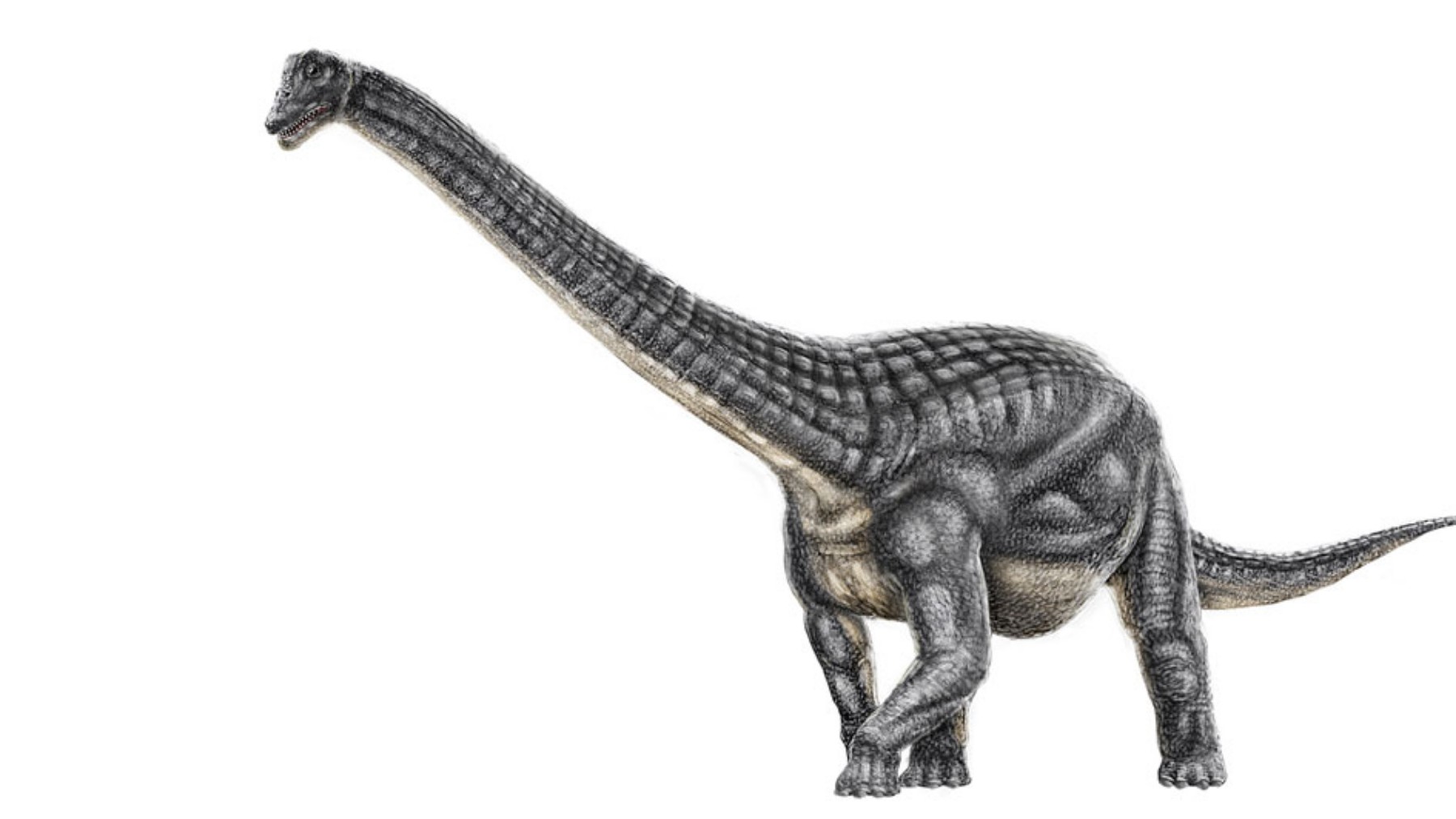
The Natural History and Science Museums are celebrating. Paleontology has been the protagonist in the discovery of a stomach fossil of a Sauropods from which there were hardly any data. Diamantinasaurus, belonging to the Cretaceous dinosaur family, was one of the largest species recorded. The discovery of the fossilized stomach in an excavation carried out in Australia, has allowed to obtain information about its feeding and digestive process, since the remains have been preserved practically completely. It is fascinating how History and Biology continue to surprise us and give us knowledge so many millions of years later!
Sauropods
Over a century of research on sauropods by researchers and paleontologists, who have focused on investigating how they fed and what their diet was, with little success. These herbivorous beings lived on Earth for more than 130 million years, dominating the ecosystems of the Mesozoic. Until this last finding, only guesses could be made based on the remains of worn teeth, fossil footprints or anatomical reconstructions, but nothing has ever been established.
Prehistoric discovery
In 2017, during an excavation that was being carried out at Beltmon Station, northeast of Queensland in Australia, the so-called Diamantinasaurus was found. It was an 11-meter long subadult fossil that lived 101 million years ago. Up to now, nothing was new for the researchers. However, what was initially mistaken for a hardened rock attached to the skeleton, was stuck in a cololith. What is that? A set of fossilized intestinal contents, perfectly preserved, located in the part where the abdomen would be.
Why is it so important?
The diet of Diamantinasaurus has not been determined for certain until now due to lack of evidence. However, as the study in the journal Current Biology states, it is not only about knowing that he ate, but how it affected the dinosaur itself, the ecosystems of his environment. The interior of the cololith was a source of information; fertile bodies of ferns with seed, leaves of anguisperms and remains of conifers. How is it possible that they have been preserved in such a good condition after almost 100 million years?
Chew vs ferment
This has undoubtedly been the most revealing finding of all the research. After analyzing the remains found, it has been seen that the ingested plants were not completely crushed, but rather appeared to be swallowed whole or almost whole. This indicates that the Diamantinasaurus (and, of course, all other sauropods) did not chew food, but that its digestive system was responsible for breaking it down and digesting it.
This would be a process called fermentation in the intestine for the purpose of breaking down vegetable cellulose, just as elephants or rhinos do. What is this fermentation? The digestive system acted as a warm environment where bacteria and microorganisms extracted nutrients from plant matter. This gives rise to new hypotheses; will it be because of that heat that sauropods had a long neck and tail, in order to regulate the temperature?
Generalist eater
It seems like the Diamantinasaurus didn’t turn its nose up at any plant.
The variety of plants found in the intestines of the fossil included tall tree vegetation as well as others that were at ground level. The relevance of this information is that the period to which this fossil corresponds coincides with the period in which the plants began to expand towards the southern hemisphere. Diamantinasaurus not only lived in a changing environment but I participate in that change.
This species was extraordinarily large, so its mass feeding could change a landscape in a very short time. Therefore, they were called “ecosystem engineers”, since they forced the plants to develop defense methods or rapid regeneration.
This discovery is a new leaf in the field of paleontology and biology, providing answers to questions that were unanswered and giving us a greater vision of what happened on our planet millions of years ago.
Find out about other creatures that lived in our planet million of years ago!