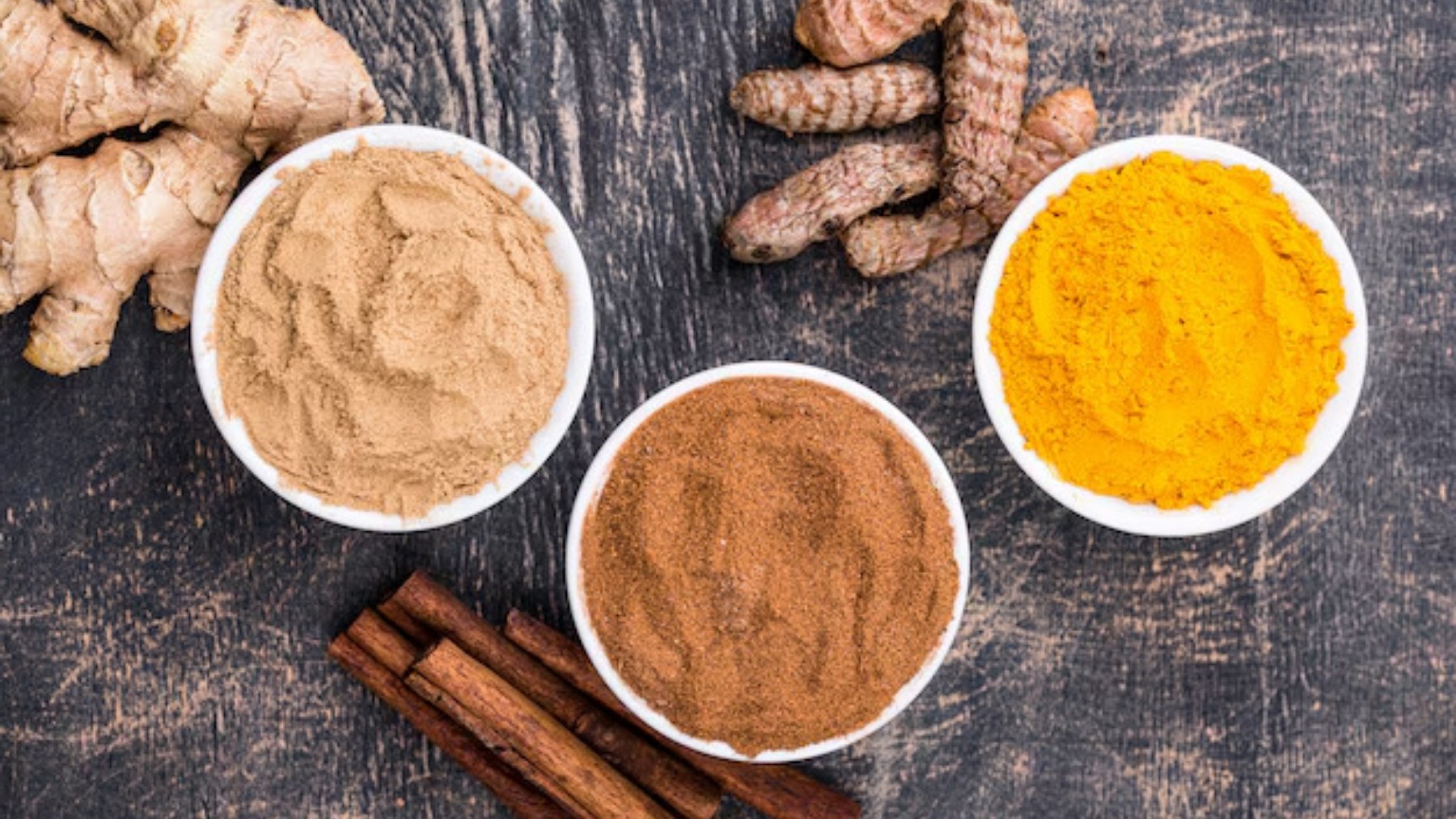
Surely if you take a look at your spice box, you will find some (if not all) of the ones that have become more fashionable in recent years; turmeric, ginger and/or cinnamon. These spices are legacy of traditional Chinese and Ayurvedic medicine for their healing as well as culinary qualities.In porridge, meat, fish, vegetables, supplements… These spices more characteristic of the East have been slipped into our kitchens to be part of our recipes. But, do they pose any threat to our health?
Cinnamon
Let’s start with the sweetest: cinnamon. Its active compounds include cinnamaldehyde, eugenol and coumarin. On the other hand, cinnamon oil used for herbal aromas and remedies comes from leaves and bark. Its health benefits make up a long list, as it is antioxidant and anti-inflammatory, reduces blood sugar levels, brain function and reduces the risk of heart disease. However, the University of Missisippi has published an article in which it collects some contraindications of cinnamon and its consumption. Cinnamaldehyde appears to interact with receptors that accelerate the elimination of drugs from the body, and may reduce their effectiveness. This process is still in the animal research phase and should not affect humans, but it does pose uncertainty.
What should be taken into account?
As if this was not enough bad news for cinnamon lovers, we also have to take into account the type of cinnamon. On one hand, we have the Ceylon cinnamon, original from Sri Lanka and usually the most expensive one. On the other hand, the cassia cinnamon -which is the cheapest and one that we find in supermarkets-, from different parts of Asia.
It has high levels of coumarin, which according to the studies is directly related to damage to the liver if high doses are taken. In addition to all these properties, cinnamon is anticoagulant, which means that it helps prevent blood clots, so it can pose a risk for those who take this medication. Other studies also point to cinnamon as an enemy of diabetes-related medications, analgesics, cancer drugs and antidepressants.
Turmeric and Ginger
Its consumption generates numerous benefits at the medical and culinary level. Like cinnamon, studies have not yet been able to determine its direct interference with medicines, but the possibility of this is a warning. There is evidence of how it affects liver enzymes. This translates as that it could interfere with antidepressants, arterial pressure treatments, antibiotics and chemo. Another benefit is that it reduces the blood sugar level and reduces arterial pressure, so it would not be compatible with treatments for diabetes or hypertension.
When we it comes to ginger, the attention is drawn to diabetics, since one of its properties is to reduce blood sugar. There are still no studies that explain how much it affects the treatment, as if it happens with anticoagulants (another of its properties).
Doses
The direct consequences of medicines still have some gaps. Although these spices have been shown to be involved in the processing of medicines, the results have only been attributed to high doses, specifically those found in supplements. Spice up our food, coffee or tea does not necessarily pose a risk to those who take this type of medicine. However, if the idea of supplementing your diet with a supplement is hovering over your head, it would not be wrong to consult a professional to rule out any kind of consequence. So with the advice of a professional and with accepted daily doses, let’s enjoy delights like chicken curry, oatmeal with cinnamon and one hot infusion of turmeric and honey!
Here you have a delicious recipe with these spices. Enjoy!