
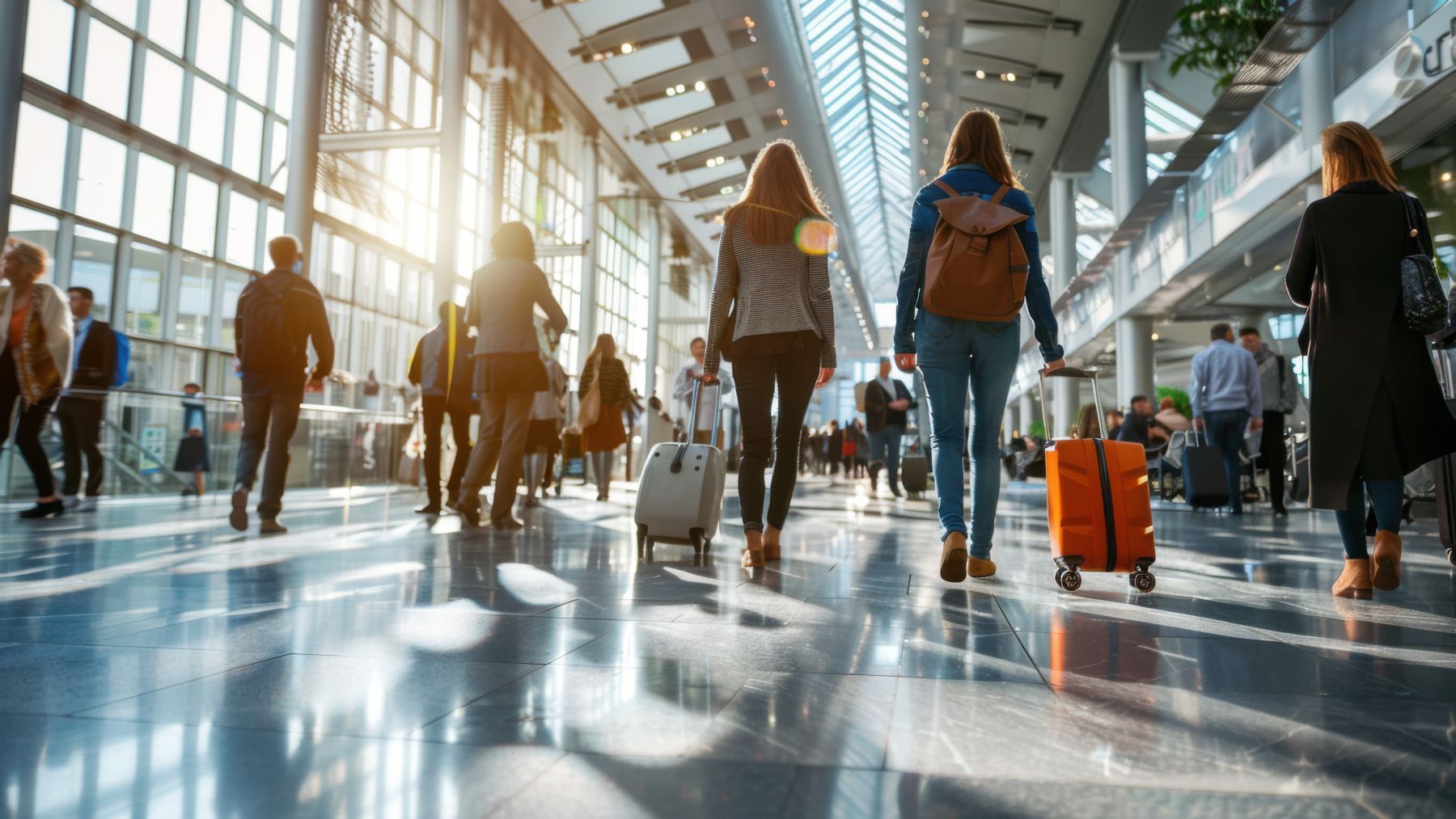
The United States has announced the end of shoe removal at airport security checkpoints. This was confirmed by the Transportation Security Administration (TSA) following the official announcement by Kristi Noem, Secretary of Homeland Security.
The new measure will go into effect at all US airports with the aim of streamlining one of the most common delays for passengers at the airport. Nowadays, boarding a plane has become almost routine for many citizens, so making the experience less complicated is sure to improve the journey.
“We can implement this change while maintaining the highest security standards”
As Kristi Noem, Secretary of Homeland Security has explained in her multi-layered security approach, we are confident we can implement this change while maintaining the highest security standards.” Noem closed the statement saying that “this initiative is just one of many the Trump administration is pursuing to usher in the President’s vision for a new Golden Age of American travel.”
The footwear requirement began in 2006, but its roots date back to 2001, when a passenger attempted to detonate explosives hidden in his shoes during a flight from Paris to Miami. The requirement that passengers remove their shoes at TSA security checkpoints was implemented almost five years later, due to “intelligence indicating a persistent threat,” according to an official TSA log. This occurred after the failed terrorist attack using liquid explosives on transatlantic flights in August 2006. In response, the TSA also implemented its liquids rule for carry-on bags.
To know what they can and can’t carry as carry-on luggage
Airport security measures were drastically tightened, especially after the 9/11 attacks. Nowadays, it’s normal for every passenger to know what they can and can’t carry as carry-on luggage. Liquids must be kept in separate bags, electrical appliances must be placed in individual trays, platform or heeled shoes must be removed and checked in as luggage… Not long ago, the introduction of security screening via scanning caused a stir. A measure that has begun to reach more and more airports. Also new is the improvement in object detectors, which in some airports now allow passengers to avoid having to divide objects into separate trays, instead allowing everything to be checked together, with the same detector responsible for inspecting them.
Privacy or security?
Security and privacy are two pillars of everyday life that practically walk hand in hand. On the one hand, there’s the importance of maintaining individual security, whether it’s related to the use of personal data on the internet or physical security at an airport. And on the other, maintaining individual privacy. For many people, one cannot coexist without distorting the other. The ease of creating videos, stories, and voice notes on messaging apps clashes with users’ concerns about wiretapping, which helps advertising reach consumers more directly. And on the topic at hand, the convenience of not having to remove shoes or accessories in exchange for a full-body scan.
How will affect the TSA PreCheck Program
Some passengers are wondering what will happen to the TSA PreCheck Program. This option is available in the United States, allowing travelers who wish to apply for it by paying $80. Approved travelers must pass a background check and an interview, allowing them to go through airport security more quickly, without having to remove their shoes, for example. The Homeland Security Secretary assured that travelers who have it or want to apply for it can do so and will have other privileges, such as not having to remove their belts or coats, or removing items from their personal bags.
The line is drawn wherever it best suits governments and the companies that dominate the market; it’s up to the consumer to accept the rules of the game or not. Although that decision seems increasingly ambiguous.




