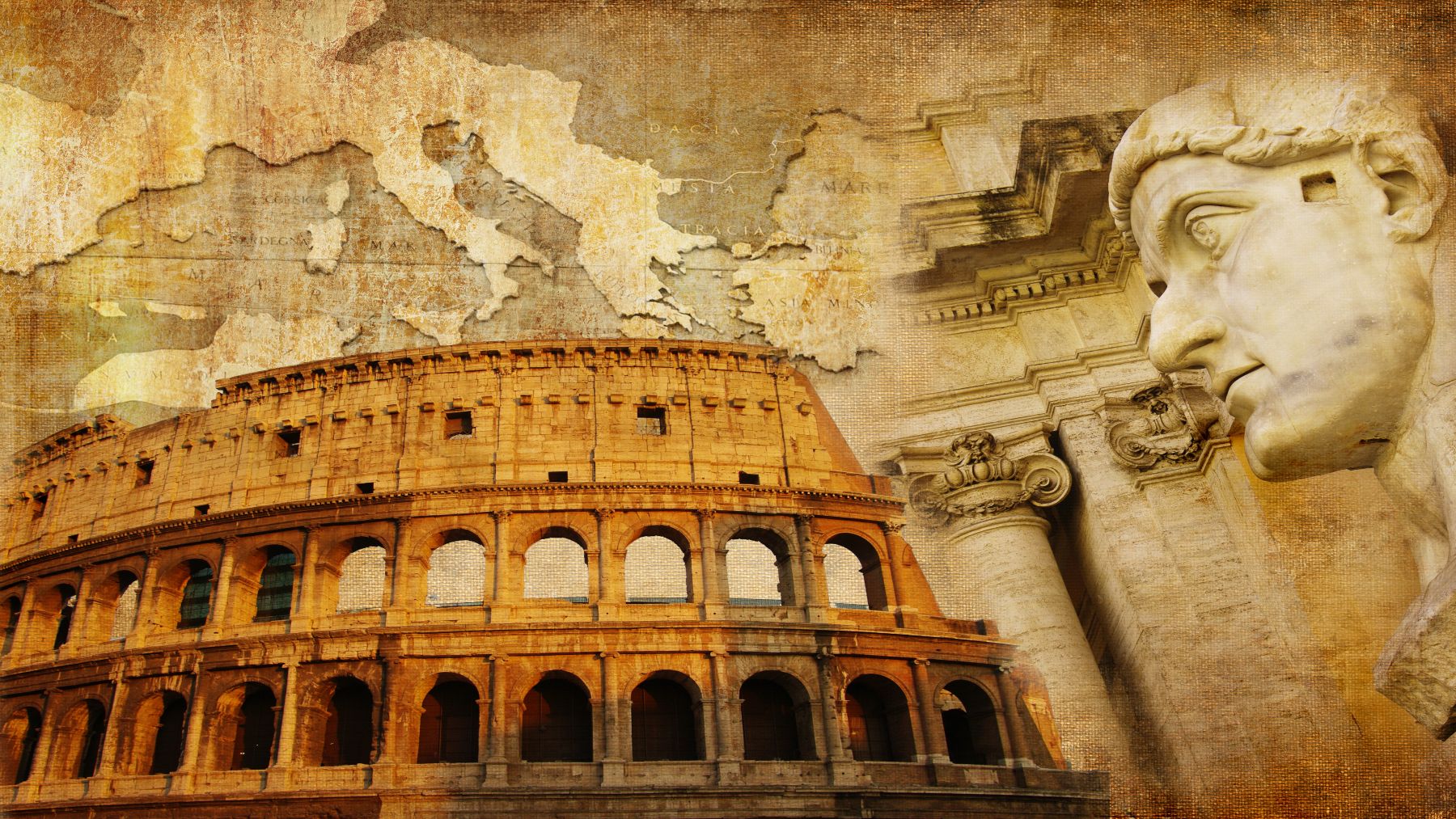
Did you know that Rome had a secret name? Even those living in that era didn’t know this great secret, much less the city’s “real” name. The Romans kept secret both Rome’s true Latin name and the identity of their tutelary deity, the Genius Urbis. Revealing Rome’s secret name could lead to punishments as severe as death. Rome’s name was the key to its power, and because of its emotional significance, it had to be inaccessible to outsiders—usually enemies and laypeople.
The true secret name of Rome has never been definitively identified
In any case, and despite the interest this question has aroused since ancient times, the true secret name of Rome has never been definitively identified. Modern hypotheses suggest various possibilities. Among them is that the name could be Valentia, Quirium, Palatium, Amor (an anagram of Rome), or even Flora, Pales, or Ops Consivia, the latter linked to the cult of silence through the figure of the goddess Angerona.
With this information in mind, it’s clear that revealing Rome’s secret name meant breaking the pact with the gods, weakening their protection, and opening the city up to catastrophe. This is the main reason for so much secrecy. A secrecy that remains prevalent today and makes this civilization an era with even more questions than answers.
Some of the most important figures in human history were born or lived in this Italian city
Rome remains a mystery in many ways. Rome became humanity’s first great metropolis and gave its name to an entire era. The way this city and its inhabitants have influenced human history makes it an absolutely magnificent place. It is also the birthplace of great painters, sculptors, thinkers, and so on. Some of the most important figures in human history were born or lived in this Italian city. Julius Caesar, Marcus Aurelius, Michelangelo, Caravaggio… All this without even considering the religious history that precedes the city.
In Roman religious thought, names were not trivial but possessed an inherent power that directly linked the named entity to the person who spoke it. This concept is already evident in a famous Egyptian myth where Isis, in order to gain dominion over Ra, forces him to reveal his secret name, an act that deprives him of his divine essence. Like the name of the god or goddess, since it protected the city from any external threat, their name was therefore never to be revealed.
One of the most notorious examples of this practice was the conquest of Carthage
The evocatio rite consisted of invoking and attracting the tutelary deities of an enemy city to abandon their place of worship and join the Roman side. Hence the importance of not revealing the name of the city’s protector. One of the most notorious examples of this practice was the conquest of Carthage, where the Romans begged the city’s protective gods to abandon it before its destruction.
Angerona, as we mentioned before, could have been the goddess of Rome. Her statue depicted her placing her finger over her closed mouth in a sign of silence, thus remaining another enigma of Roman religion. Some authors have even suggested that Angerona was Rome’s secret tutelary deity, or at least a representation of the need to keep her identity hidden.
Therefore, it is evident that the Roman Empire will remain one of the most interesting and, therefore, most incognito chapters in human history.