
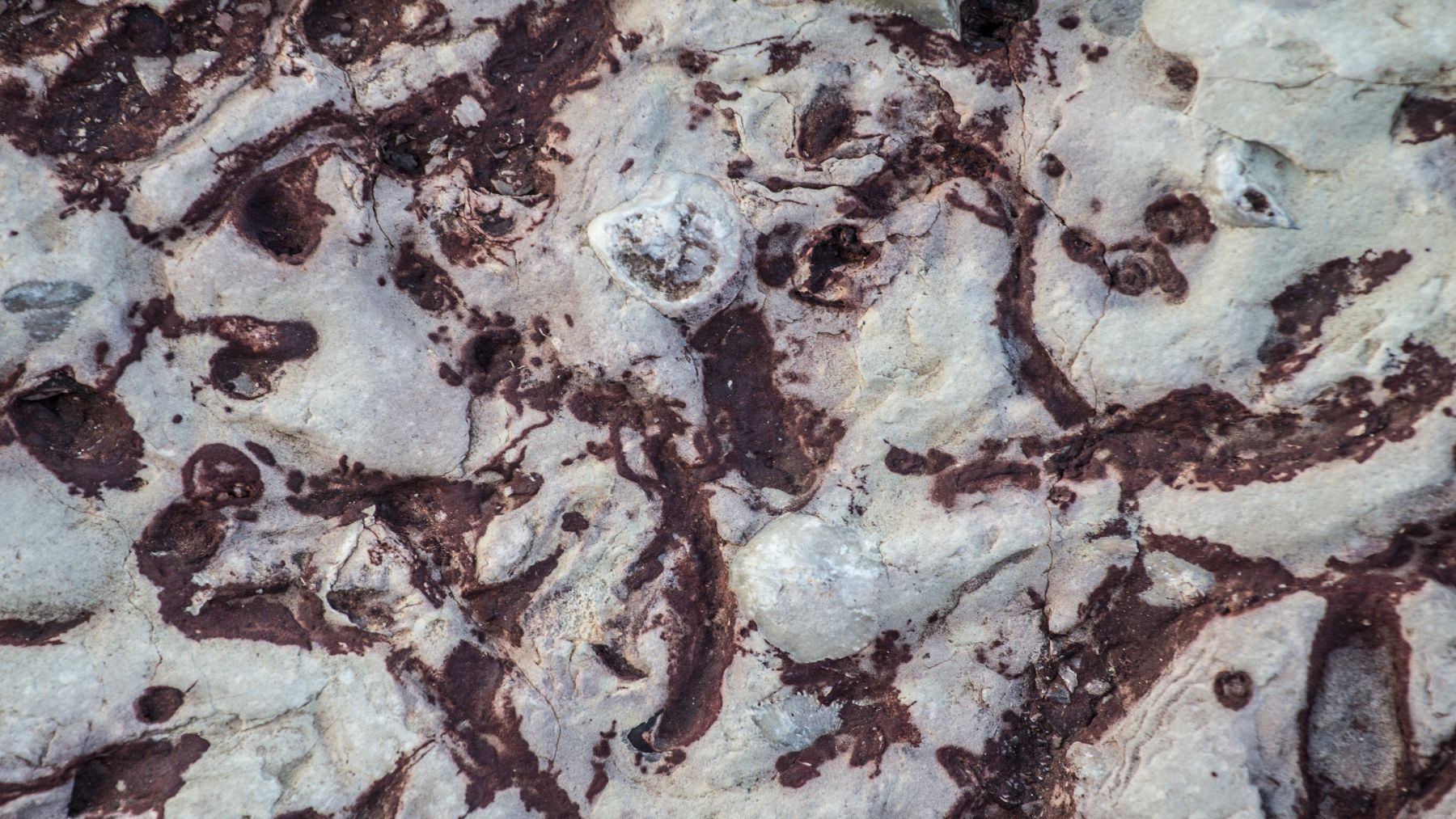
Science has helped us understand countless situations, elements, species, plants… And now it arrives with a new discovery at the Lovozero deposit. Geologists had to use radiometric dating methods, uranium-lead isotopes in zircon crystals, rubidium-strontium, and samarium-neodymium, to discover that a time-worn mine existed some 375-390 million years ago, placing its ancient legacy in the Late Devonian and containing Loparite-(Ce), a mineral treasure formed 400 million years ago.
This mineral is found in an area within the Earth where a stratified alkaline action or process occurs
Starting with the earliest, in the Late Devonian, we can say that this was a historical period in which marine life almost became extinct. Once again, nature has provided humanity with a new clue to accurately understand the magnitude of the problem we face. Loparite (Ce) is an oxide of titanium, sodium, cerium, and other rare earths that crystallizes in the cubic system, forming cubic or octahedral crystals up to 2 cm in diameter, usually penetration twins. This mineral is found in an area within the Earth where a stratified alkaline action or process occurs, forcing a body of igneous rock to move between or through existing formations, without reaching the surface.
Rare earth: a term used to describe the set of 17 chemical elements found in the Earth’s crust
It is important to understand that this mineral is found in Lovozero, which is known as Rare Earth. This term is used to describe the set of 17 chemical elements found in the Earth’s crust (fifteen that make up the lanthanide group, along with yttrium and scandium, which are included because they frequently appear mixed in the same deposits). The lanthanides are: lanthanum, cerium, praseodymium, neodymium, promethium, samarium, europium, gadolinium, terbium, dysprosium, holmium, erbium, thulium, ytterbium, and lutetium.
The main value of these elements lies in their exceptional magnetic, luminescent, and electrochemical properties
All of this is essential to understanding this recent discovery, or near rediscovery. For a long time, the world has seemingly been moving toward renewable energy, and this monumental transition relies heavily on rare earths. The main value of these elements lies in their exceptional magnetic, luminescent, and electrochemical properties, exploited in various sectors and present in everyday objects such as headphones, sensors, and protective eyewear.
These elements are used to form a multitude of minerals, more than 180, and the lanthanides in particular
Neodymium and praseodymium magnets are not only important, but also form the technological backbone behind the pioneering development of green and renewable energy. These elements are used to form a multitude of minerals—more than 180—and the lanthanides in particular—except for promethium—are found as metal oxides in around 25 minerals, among which they stand out for their use and economic benefits. Cerium and lanthanum are also essential in catalysts, glass polishing, and battery chemistry. It is now clear that Lovozero’s 12,500 tons of reserves are a vital lifeline for this entire green chain.
A mineral present in countless everyday objects such as telephones, fluorescent lamps, and cameras, as well as in the automobile industry
In terms of numbers, global production of these oxides is around 160,000 tons per year, and 95% of this comes from China, which, however, only has about 50% of the global reserves, estimated at between 80 and 120 million tons, enough to cover demand for the next 625 years. Ultimately, this concerns us because rare earths are used in many more areas, such as oil refining processes, refrigeration, energy storage, specialized glass, nuclear batteries, and X-ray tubes. Furthermore, they are present in countless everyday objects such as telephones, fluorescent lamps, and cameras, as well as in the automobile industry.




