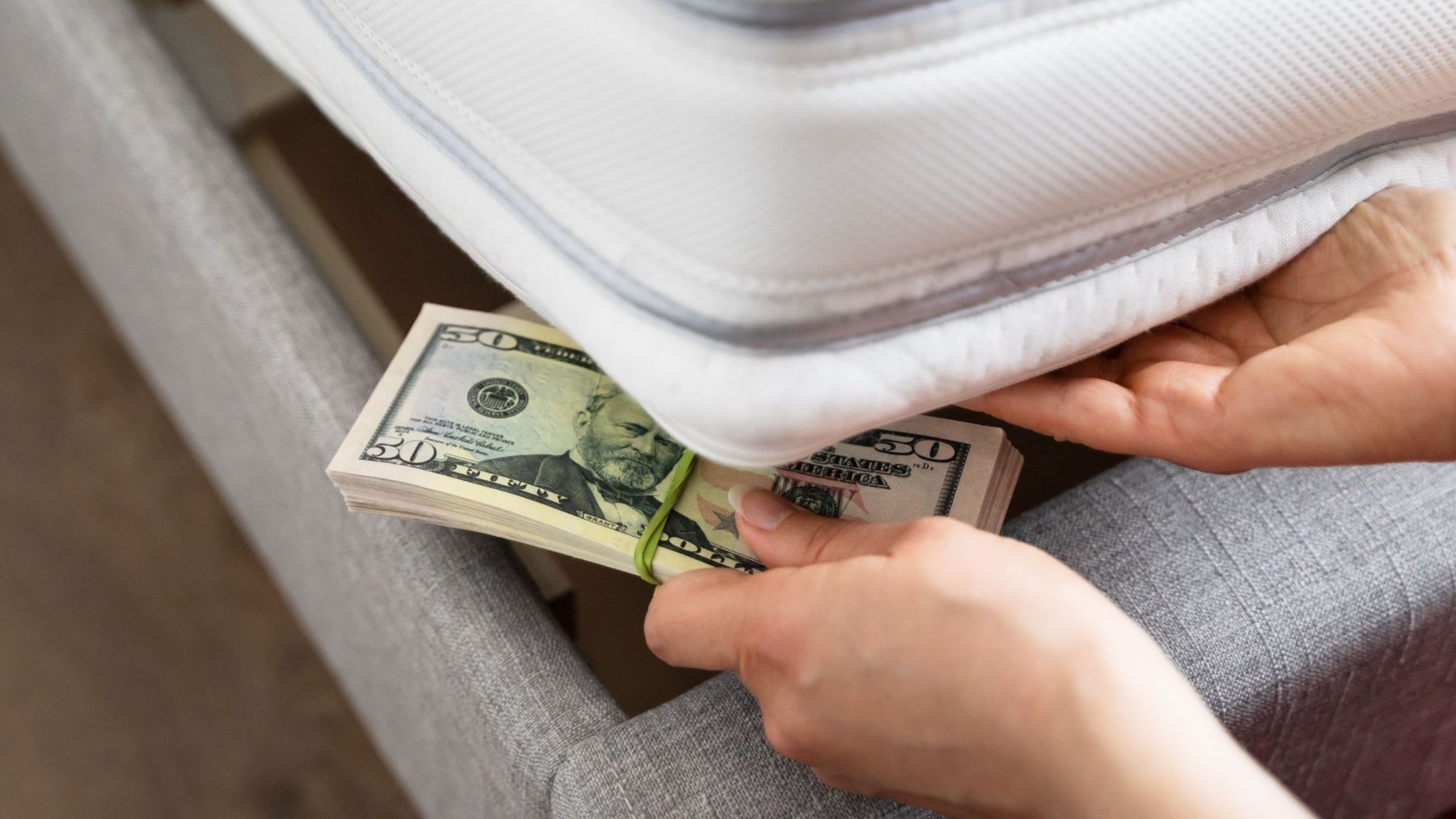
Having cash on hand is often ideal, but it is important to know where to keep it at home and what are the best hiding places to ensure security in the home. In the following list, we will go from an optimal safe to the most curious ones, such as a drawer with a bottom that does not look like what it is, to pockets in clothing, jars in the pantry, or even in the garage. These interesting home tricks are a better option for keeping your savings safe at home. Read on to learn more.
What you must know if you have cash at home
Keeping cash at home can be practical, but it can also be risky if you leave it in plain sight or in predictable places. Here are 10 smart hiding places—with advantages and precautions—to protect your money without needing a bank safe deposit box:
1. Built-in, hidden safe
A fixed safe, anchored to the floor or wall, is the most secure option. If it cannot be fixed in place, it should weigh several hundred pounds (hundreds of pounds = approximately 45–200 kg depending on the model) to deter thieves.
Place it behind a piece of furniture or inside an inconspicuous closet.
2. Behind a drawer (not inside)
Instead of leaving the bill in the drawer, stick an envelope on the back or bottom, out of sight. It’s a cheap solution and adds an extra layer of security: the average thief checks the drawer, not the back.
3. Behind pictures or wall clocks
Hide an envelope with money behind a neutral picture or clock. Avoid eye-catching pieces that might attract attention; simple art that seems expendable is ideal.
4. Bookshelf: hollow or fake book
A hollow book or a box that looks like a book are classic choices because they are inexpensive and effective. Store it among many other books so that it does not stand out.
5. Box within a box
Put cash in a case or envelope inside a box of household items (winter clothes, Christmas decorations) that is not attractive to looters. Multiple layers make quick looting difficult.
6. Opaque jars in the pantry
Opaque containers with closed lids (and no flashy labels), stored at the back of the pantry, can be excellent hiding places. Avoid typical “coffee” cans, which are often used by thieves in movies.
7. Pockets in hanging clothes
A rolled-up bill in the pocket of a coat or pants hanging among many others adds accidental friction for anyone rummaging quickly. Just make sure you remember where you put it.
8. Paint cans or jars in the garage
A paint can (empty, clean, and covered) placed next to others can camouflage a package of bills. It’s a good place if it’s not used often and doesn’t attract attention.
9. False bottom in a dresser or drawer
Creating a false bottom in a drawer or dresser—done well, without being noticeable—provides an almost invisible compartment. It requires manual skill, but offers security and quick access.
10. Flashlight or hollow tool
Objects with a hollow interior (large flashlights, old radios) can be used to store rolled-up cash. Place them among tools or common items so they don’t stand out.
Don’t always use the same hiding place; rotate locations if you are storing large sums of money.
Keep a secure record (outside the home) of where your money is and avoid counting bills in front of visitors.
Consider a combination
If you accumulate large amounts, consider a combination: part in a safe and part in a bank account or safe deposit box at the financial institution.
Now all you have to do is apply these tips to keep your money safe at home!