
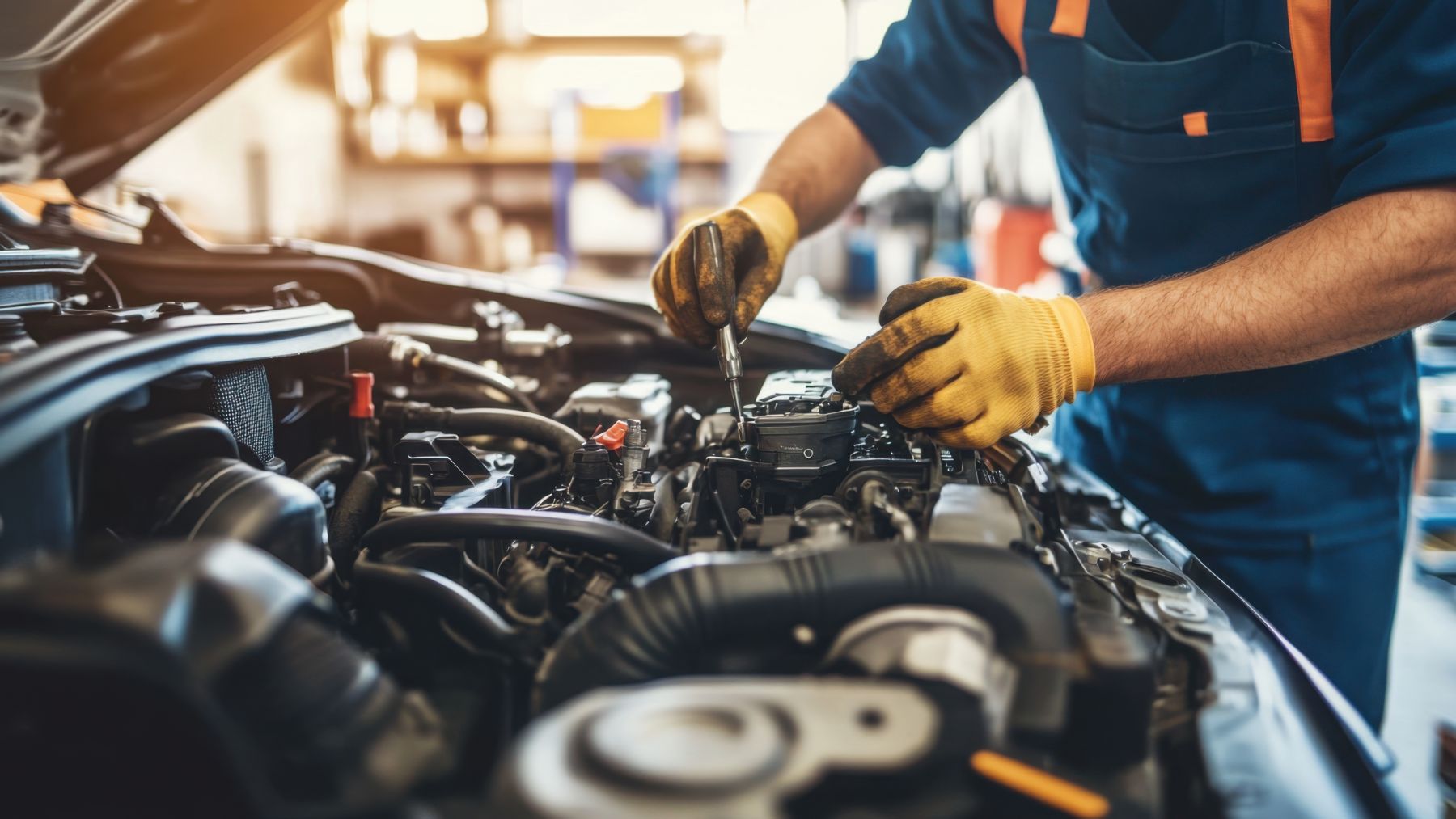
The evolution of motoring has led to major innovations in engines. The Wankel engine could be the future; neither electric nor hydrogen engines, the rotary engine could change mobility as we know it. The X-Engine redesigns the concept from the ground up. Up to five times smaller and lighter than traditional diesel engines, yet with fuel cell-level efficiency. Not all car manufacturers have dared to test this type of engine; so far, only Mercedes-Benz, Citroën, and Mazda have been known to offer it.
The engine isn’t limited to a single fuel type
This engine, despite facing challenges related to polluting emissions and fuel consumption, has featured a compact design, lower weight, and fewer parts compared to conventional engines, resulting in less vibration and noise. The engine isn’t limited to a single fuel type. It can run on diesel, jet fuel, propane, hydrogen, and even vodka, proving adaptable to different scenarios.
This flexibility makes the X-Engine ideal for multiple industries. Instead of using a set of pistons and cylinders, the Wankel engine employs a triangular rotor spinning inside an elliptical housing. They can generate a significant amount of power relative to their size and weight, making them ideal for sports cars. It’s important to mention the High Efficiency Hybrid Cycle (HEHC), a new thermodynamic cycle that combines aspects of the Otto, Diesel, and Atkinson cycles. This achieves improved compression, more complete combustion, and greater thermal efficiency, resulting in better fuel utilization, greater lightness, and lower emissions.
LiquidPiston’s X-engine promises to correct certain common flaws in conventional engines
The adaptability that rotary engines boast has attracted attention in the automotive world, but especially in the aerospace and defense sector. Aircraft manufacturers need compact engines that run efficiently on jet fuel and are lightweight. Therefore, this could be a solution worth exploring. A win-win, as they say in business.
LiquidPiston’s X-engine promises to correct certain common flaws in conventional engines. By not rotating the chamber, fuel injection is more precise and therefore cleaner, with less interaction. The shape of the chamber can also be optimized for different fuel types, making it more efficient.
Differences between a rotary engine and a conventional engine
On the one hand, while piston engines operate with a linear motion that moves the pistons up and down in cylinders, Wankel engines generate a continuous rotary motion. This difference in motion provides a much smoother and more continuous power delivery, can reduce the need for maintenance and decrease the likelihood of mechanical problems, and allows for more efficient space distribution.
In terms of revolutions per minute, Wankel engines are capable of operating at higher rpm than piston engines, allowing them to reach power levels more quickly. Furthermore, rotary engines offer a high power-to-weight ratio, generating great power with a low weight.
Some disadvantages of these engines:
On the one hand, costs. Because they are not as well-known or common in automobiles, rotary engine maintenance is more complex. Qualified mechanics are difficult to find, and repair or replacement costs therefore increase. On the other hand, the continuous movement of the rotor and the sealing required in the engine design have raised concerns about durability and maintenance. And in rotary engines, it is often difficult to insulate the three rotor sections, which must be separated for proper operation.
Ultimately, this news serves as a boost to the automotive world to continue exploring new and improved ways of burning fuel in order to protect the planet and avoid emissions that harm the health of the ecosystem as well as humankind.




