With these discoveries, therefore, Saqqara confirms its role as the epicenter of ancient Egyptian funerary and architectural innovations. This site is located 30 kilometers south of Cairo, and, by the way, due to its location, we can also say that the extraction and transportation of the materials used in the burials from Aswan demonstrates the importance of those who suffered there.
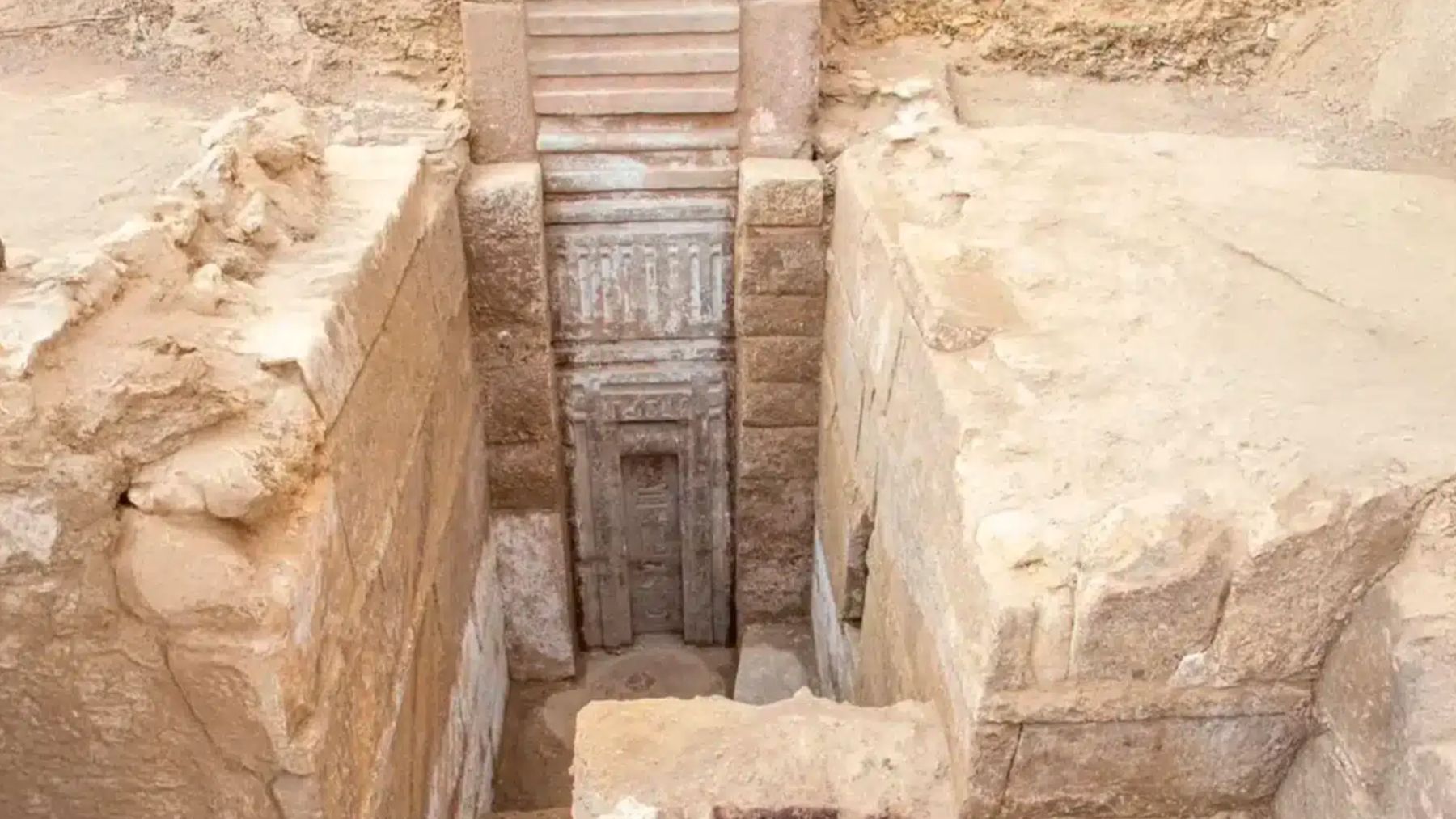
The spectacular pink granite false door measures about 4.5 meters high and 1.15 meters wide and is decorated with hieroglyphic inscriptions
The curious thing about this discovery is that the door is almost impossible to open and apparently leads nowhere. This false door, as a symbolic entrance and not an entrance, reveals the complex religious ideas about death and communicating with the afterlife. The spectacular pink granite false door measures about 4.5 meters high and 1.15 meters wide and is decorated with hieroglyphic inscriptions detailing the prince’s noble titles: ‘Heir to the throne,’ ‘Governor of Buto and Nekheb,’ ‘Royal scribe,’ ‘Minister,’ ‘Judge,’ and ‘Singing priest.’ Its vast inventory of granite objects and the evidence for use over several dynasties suggests a royal tomb.
The number of answers this discovery provides is incredible for science, archaeologists, paleontologists, and other researchers. It’s not just the granite door that’s at stake, but the inscriptions and artifacts found almost perfectly describe life in a period about which new discoveries are still being made. Also found inside the tomb was a red granite offering table, 92.5 centimeters in diameter, engraved with lists of ritual foods. All this explains certain funerary rituals through which, for example, it was believed the deceased could magically absorb the essence of the offerings placed before the false door. In any case, the offering tables also reveal daily ritual practices of the Egyptian elite and their priests. Evidently, this type of burial was not for everyone.
These statues depict Pharaoh Djoser with his wife and daughters
With the Pink Door, archaeologists already thought they had found something very special, until they found granite statues inside. These statues depict Pharaoh Djoser with his wife and ten daughters. It is curious to find female representations from this period, which, according to experts, demonstrates the strong sense of family with which they wanted to be remembered. The scene shows Djoser placing his protective hand on one of his daughters, while the queen repeats the gesture with another of the young women. This collection of figures was placed inside the tomb of Userefre.
This discover enriches the investigation and proves how extraordinary is this finding
It’s important to emphasize that these figures were moved from their original location. Experts are still searching for answers to this question. The original reason for this move is unclear, as another black granite statue measuring 1.17 meters tall was found in the adjoining chamber. This time, it represented a standing man. These findings demonstrate that the tomb was reused after its first burial. Although it may seem strange, it isn’t for archaeologists, as this was common in this area of Saqqara. This may seem to disrupt the investigation, but it actually enriches it, providing much more information and proving quite extraordinary.
One of the clear conclusions is that, on the one hand, the materials used, including pink, red, and black granite, and, on the other, the size of the sculptures and inscriptions, clearly demonstrate the wealth of those who used these tombs. From the first use to subsequent uses, the data found demonstrates that these rituals were intended for the highest and most distinguished class of the time.
With these discoveries, therefore, Saqqara confirms its role as the epicenter of ancient Egyptian funerary and architectural innovations. With the information we have, we can also say that there is even more to discover. We just have to give time to the researchers and develop the technology needed.