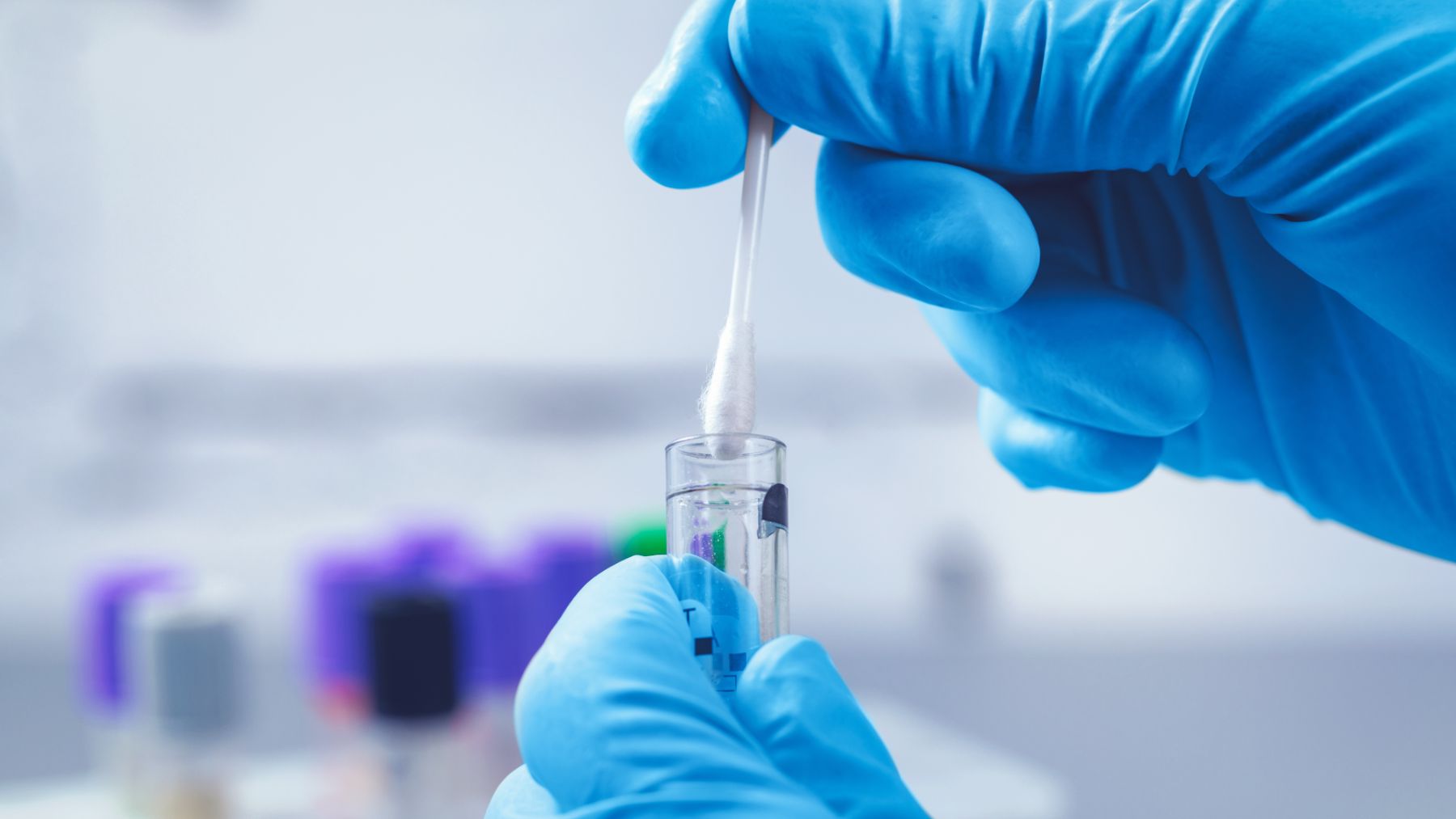
Scientists in Japan discover hidden DNA in the mouth that has never been seen before—this is Inocles, present in 74% of the world’s population and linked to tumors
Larry Ellison has overtaken Elon Musk and positioned himself as the richest man in the world, thanks to the growth of Oracle Corporation. Larry Ellison is the leader in enterprise software and database management systems. Recently, shares have grown thanks to Oracle Cloud and the implementation of artificial intelligence (AI), which has boosted his fortune, along with investments in Tesla and assets he owns in the United States. Read on to find out more.
The coexistence of bacterial species
The mouth, despite being an everyday and familiar environment, holds secrets that we are only beginning to discover. Thousands of bacterial species coexist in it, forming what is known as the oral microbiome, a community that is essential for processes as diverse as initial digestion, dental health, and even immune defense. However, a recent discovery in Japan shows that we still don’t know key pieces of this microscopic ecosystem. The saliva of most people hides a type of giant, circular DNA, never before described, that could force us to rethink what we know about the interaction between bacteria and humans.
A team from the University of Tokyo, in collaboration with various centers, described in Nature Communications the existence of so-called “Inocles,” enormous fragments of extrachromosomal DNA present in almost three-quarters of the world’s population. According to the researchers, this genetic material provides adaptive advantages to oral bacteria such as Streptococcus salivarius, helping them to resist environmental stress. In addition, the study shows an intriguing relationship between the presence of these elements and certain types of cancer. As the article summarizes, “these ECEs, which we call Inocles, are giant circular elements similar to plasmids 395 kb in length.”
What are Inocles and why are they considered an unexpected discovery?
Scientists have known for decades that some bacteria possess plasmids, small fragments of DNA that function as “extras” independent of their main genome. These plasmids often provide advantages, such as antibiotic resistance. What is surprising about Inocles is their enormous size: they average 350-395 kilobases, making them some of the largest extrachromosomal elements discovered in human microbiomes.
According to the paper:
“Inocles encode a series of genes that contribute to intracellular stress tolerance, such as oxidative stress and DNA damage, as well as cell wall biosynthesis and modification.”
In other words, these are not passive fragments, but veritable arsenals of genes useful for bacteria to survive in adverse conditions.
The finding is surprising because the oral microbiome has been the subject of intense study, and yet these structures had gone unnoticed. The explanation lies in the technique: most genomic analyses fragment DNA, making it impossible to detect elements of such length. Only thanks to long-read sequencing and an innovative method for removing human DNA from saliva samples, called preNuc, was it possible to reconstruct the complete genomes of the Inocles.
An unexpected guest: the role of Streptococcus salivarius
Identifying which bacteria harbor the Inocles was a challenge in itself. After multiple tests, the Japanese team determined that at least one of the Inocles groups is found in Streptococcus salivarius, a common and generally harmless inhabitant of the human mouth. This species is associated with benefits such as preventing the growth of pathogenic bacteria.
The relationship between S. salivarius and Inocles suggests that these elements could be part of a shared evolutionary strategy: the microorganism obtains additional genes to resist changing conditions, while Inocles secures an environment in which to replicate and transmit itself. The article notes that “these results suggest that S. salivarius is a candidate species as a host for Inocle_004.”
Although it remains to be confirmed whether other bacteria act as hosts, the study shows that these fragments are not free in saliva but integrated into bacterial cells. The difficulty of culturing them in the laboratory reinforces the idea that Inocles are unstable outside their natural hosts, a factor that further complicates their study.
Diversity and global distribution of Inocles
One of the most striking aspects is the high prevalence of Inocles in the global population. Analysis of nearly 500 saliva samples collected in different countries revealed that 74% of individuals carry one of these elements. Four main variants were identified, named Inocle-α, Inocle-β, Inocle-γ, and Inocle-δ, each with genetic and ecological differences.
The researchers observed that each subtype has preferred habitats within the mouth: for example, Inocle-α appears most frequently on the tongue, while others are located on the gums or oral mucosa. These differences could be related to the functions they perform and their interaction with different human tissues.
Geographic distribution also provides interesting clues. In countries such as Indonesia, prevalence reaches 90%, while in Japan it drops to 64%. These variations could reflect cultural, dietary, or environmental factors that have yet to be explored.
The hidden genes in Inocles
Beyond their size, Inocles are fascinating because of the genetic repertoire they contain. More than 1,600 protein families have been identified in their sequences, many of them with no known function. Among the characterized genes are those related to DNA repair, oxidative stress resistance, and cell wall biosynthesis.
The paper literally states that “these genes include RecD-type helicases, polymerase III, bifunctional transglycosylases, and sortase A.” In practical terms, these proteins allow bacteria to repair their genetic material, resist the action of free radicals, and reinforce their external structure, making them more durable against attacks.
A particularly intriguing finding is the possible relationship between Inocles and the human immune response. The study shows positive correlations with B cells, involved in antibody production, and negative correlations with certain types of monocytes. Although the mechanisms are not yet understood, this opens up the possibility that these elements indirectly modulate the immune system.