
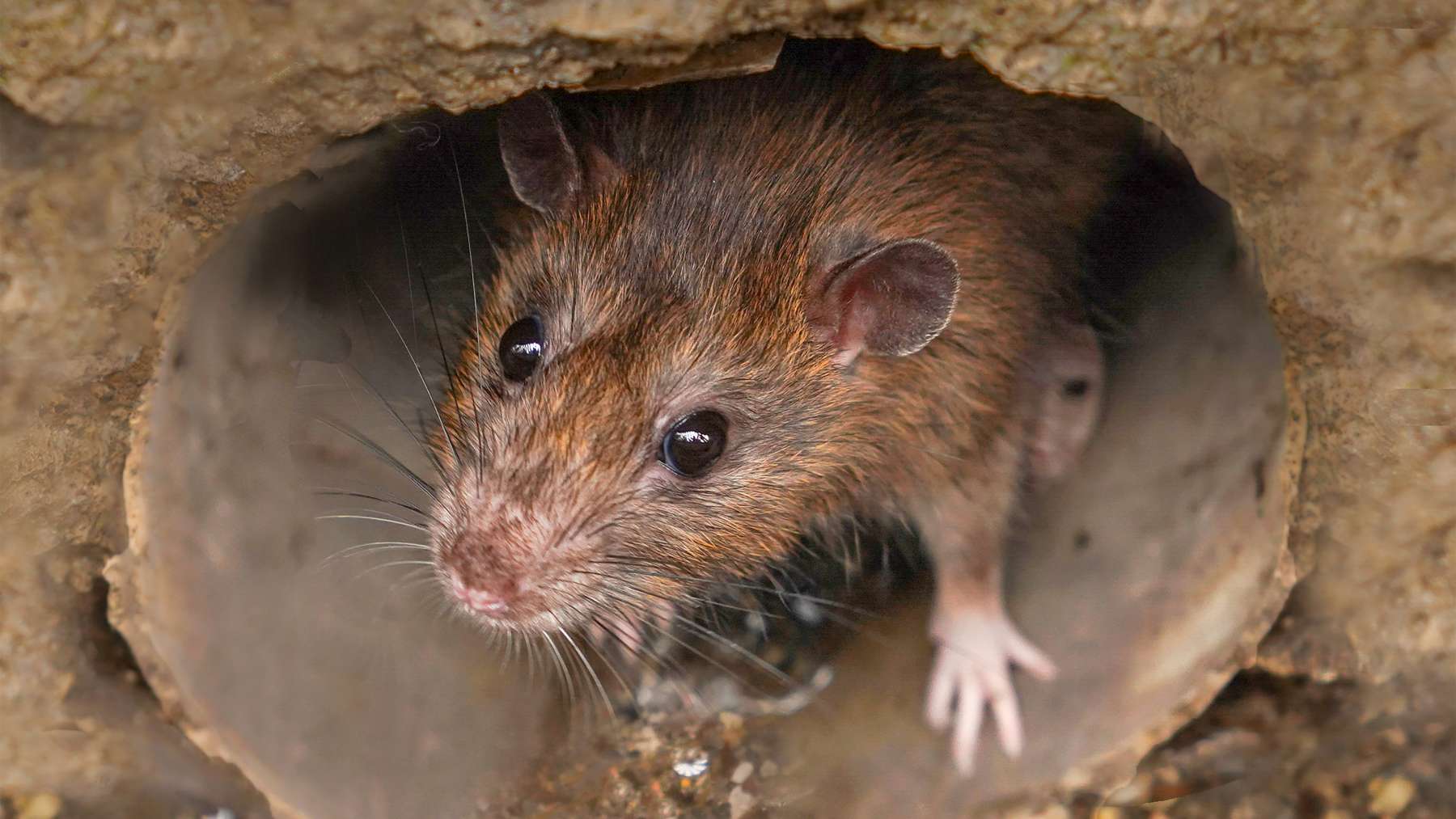
A recent study reveals that climate change and urban population growth contribute to the predictable increase in rat infestations in cities, posing the question of how to stop this trend. Except for certain tropical and subtropical regions, the brown or gray rat (Rattus norvegicus) is found in large numbers in all urban areas of the world. Since the beginning of time, rats have lived with people. Some species made their way to Europe from their original area in China and Mongolia, including the brown rat (Rattus norvegicus), often known as the gray rat or sewer rat. On the Old Continent, other species, such as the black rat, were already flourishing centuries earlier. However, they have never had so many factors working in their favor to become out of hand.
Scientists are worried because rats are taking over cities
Since these rodents are so despised by humans but are so intimately associated with human activity, overcrowded cities, and warming temperatures provide the ideal environment for them to thrive and have unrestricted mobility. Nowadays, practically all wild rats are synanthropic, meaning they coexist closely with humans as a result of the intimate communion between rats and people. They use our infrastructure as shelter and consume our leftovers. They couldn’t survive without us, to put it another way. As it turns out, the best place for these rodents to thrive is in urban areas; the more densely populated, the better. These findings were drawn from a recent study that examined urban rat populations in 16 cities worldwide, of which 11 (69%) reported a significant increase in these rodents.
In addition, the study found that pests were more prevalent in urban areas that were more densely populated and had higher temperatures. A simple calculation is sufficient to conclude that, given that there will likely be a significant increase in the number of overpopulated megacities where the average temperature increase will be more than notable, rats will likely be around for a long time. Rat populations in major cities including Washington, San Francisco, Toronto, New York, and Amsterdam are predicted to rise significantly in the upcoming years, which is bad news for their residents. On the opposite end of the spectrum, cities like Tokyo, Louisville, and New Orleans will gain from a considerable decrease in rodent populations.
Rat populations increase in proportion to the temperature
One of the most outstanding conclusions of the study is the strong relationship between the increase in temperature and the proliferation rate of rats. As small mammals, these animals do not do well in the cold, so as the temperature drops, their metabolism and heart rate are altered, their breathing speeds up, and their immune system suffers. On the other hand, higher temperatures mean a longer breeding season and better opportunities to forage for food for longer periods. Jonathan Richardson, an assistant professor of biology at the University of Richmond in the United Kingdom, discovered that rising temperatures can explain up to 28% of the variation in rat population trends, followed by urbanization level and population density.
However, the study also turned up some other intriguing information. Take the value of green areas, for instance. They examined how the size of parks and gardens changed between 1992 and 2020 and discovered that generally speaking, greener towns had fewer rats. Green spaces in major cities act as lungs for animals, allowing them to breathe and cleanse the atmosphere of pollution. Urban parks offer sanctuary to a variety of animals, including birds and rodents, but they are not always a haven for rats. Moreover, data suggests conflicting effects, with tiny parks likely favoring rats due to free dirt and rubbish, whereas huge parks such as New York’s Central Park may benefit rats living around the perimeter, but food availability outside the park’s boundaries can lead to higher rat populations.




