
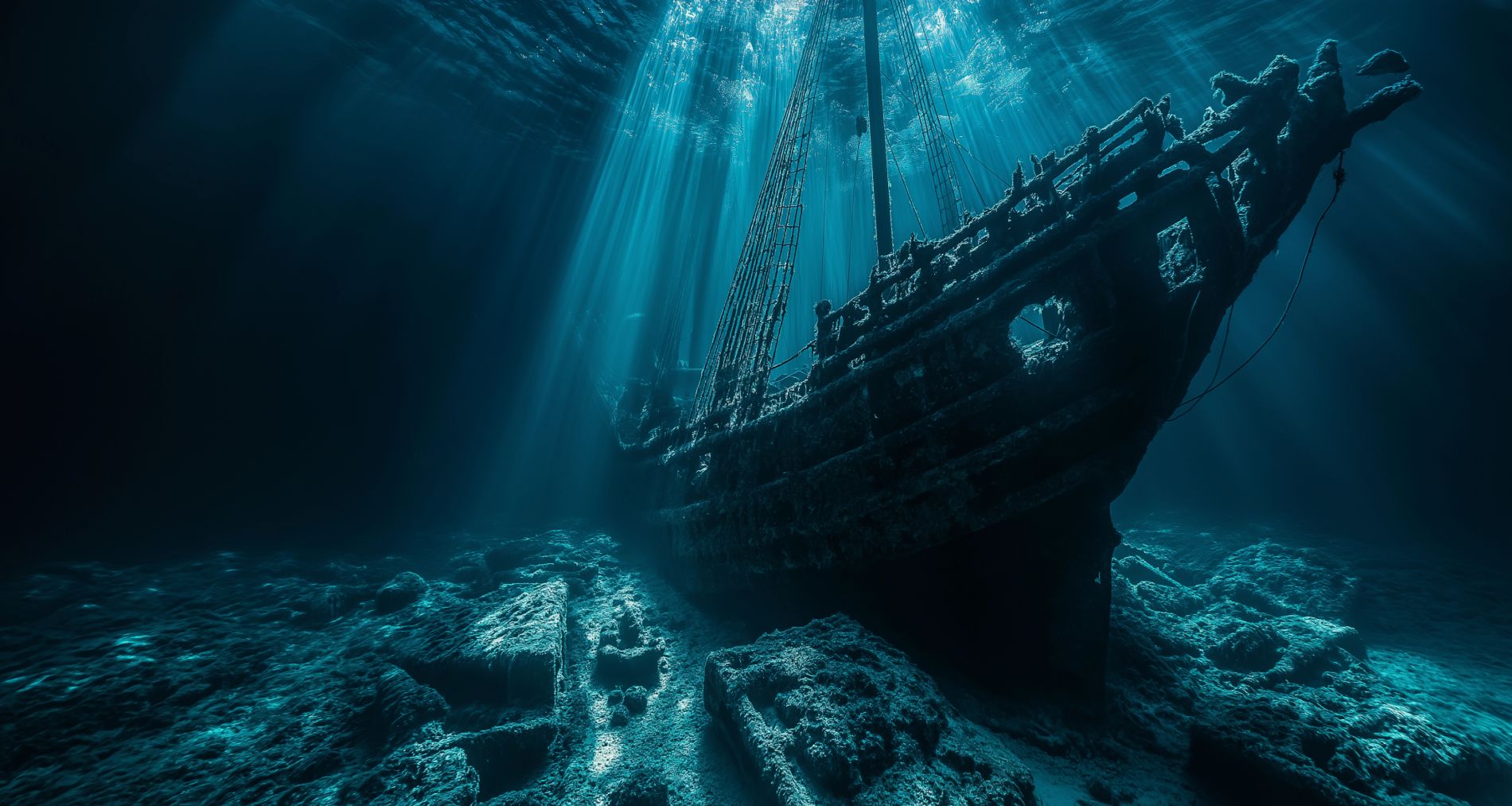
Madagascar has become the center of interest for all those curious about pirate life. The remains of a ship captured in 1721 have just been discovered. The vessel was filled with gold, pearls, and, as far as is known, carried 200 slaves, with its treasure valued at 138 million euros. The wreck of the Nossa Senhora do Cabo was found on the island of Nosy Boraha, known in the 18th century as Île Sainte-Marie.
The ship attracted the admiration and covetousness of corsairs and pirates alike
Researchers have identified the remains of this ship that sailed from Goa, India, bound for Lisbon. The Nuestra Señora del Cabo is a 700,000-kilogram Portuguese warship, built to protect the country’s imperial interests and transport valuable cargo to Lisbon. On board were two prominent figures: the outgoing viceroy of Portuguese India and the Archbishop of Goa. The viceroy was released after a ransom was paid, but the archbishop was never heard from again.
Equipped with 72 cannons, the ship plied the most dangerous routes between the continents, attracting the admiration and covetousness of corsairs and pirates alike. All this information, which is known thanks to the results of the studies, along with interviews and photographs from the investigations and excavations on the Nossa Senhora, was published in recent issues of Wreckwatch, a magazine considered a world reference in the field of sunken treasure.
The raiders set sail for Nosy Boraha, a place to divide the loot
Specifically, according to research, the Nossa Senhora do Cabo saw its voyage to Lisbon interrupted after being attacked by a group of pirates. The raiders set sail for Nosy Boraha, a place to divide the loot. This island was then a strategic point, with protected bays and a complete absence of colonial presence. Between 1700 and 1730, dozens of European pirates used this corner as a base of operations. In fact, the remains of this ship are not the only ones found in this area of the ocean.
For nearly twenty years, the team at the Center for the Preservation of Historic Shipwrecks devoted themselves to an exhaustive study of the area. The underwater excavation has not only confirmed the ship’s identity thanks to its hull structure and the distribution of ballast stones, but has also led to the recovery of more than 3,300 artifacts. The haul at that time included objects such as Chinese porcelain, nutmegs, gold and silver coins and ingots, silks, wood and ivory carvings, religious figurines, and a staggering amount of precious stones, whose value is now estimated at $100 million.
Some 200 Mozambican slaves are known to have traveled in the ship’s lower compartments
Among the discoveries, researchers also found human remains and fragments of personal belongings. All of this suggests that some of the crew or slaves traveling on the ship may have died during the assault or in the days following. In total, some 200 Mozambican slaves are known to have traveled in the ship’s lower compartments, although their ultimate fate remains an unsolved mystery. No official documentation has been found recording the fate of the slaves traveling on board.
The sand still covers much of the site (for obvious reasons), and it’s believed that more artifacts, unique pieces that help clarify the details of that legendary assault, may lie beneath it. For example, some of the objects that have drawn particular attention have been the religious figures. The crosses and liturgical elements point to a strong representation of ecclesiastical power within the voyage.
What is clear is that there are still many more things to discover and questions to answer, but this discovery has been a breath of fresh air in the path of understanding an era and a way of life (the navy) about which little is known.




