
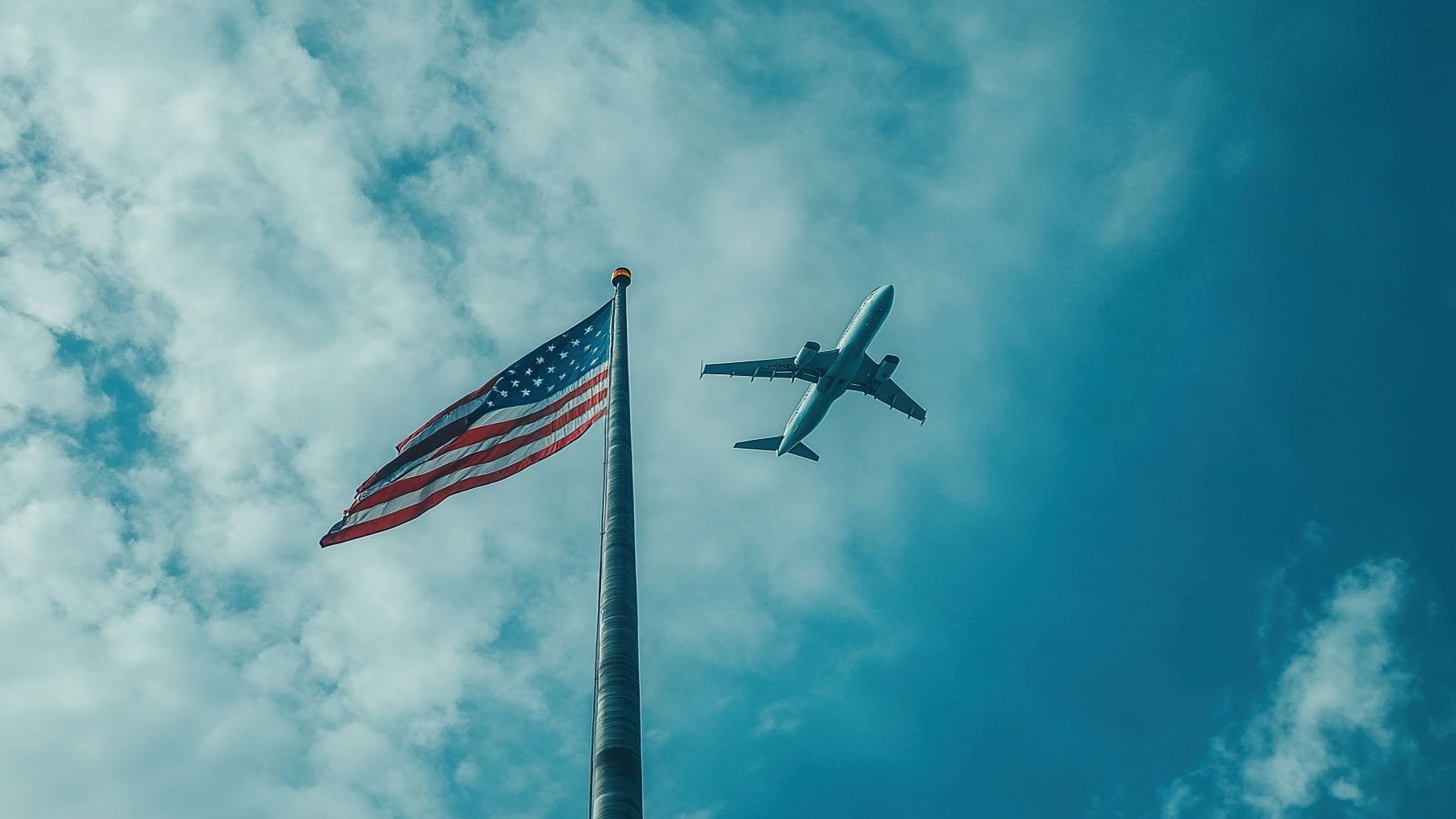
Supersonic flight is returning to the United States. The U.S. Federal Aviation Administration (FAA) banned such flights in 1973 in response to public pressure over noise concerns. Now, the new executive order, issued on June 6, lifts that restriction and establishes a new timeline for the introduction of noise-based certification standards for supersonic flight. Currently, companies like Boom Supersonic are developing supersonic aircraft that can reach Mach 1—more than 1,200 kilometers per hour—and make no noise at ground level.
The FAA will officially lift the restriction by December 3, 2025, establish noise certification standards by 2026
In two years, we’ll likely be able to make a New York-Los Angeles flight in three hours, instead of the current six hours. According to reports, the FAA will officially lift the restriction by December 3, 2025, establish noise certification standards by December 6, 2026, and define final operating rules by June 2027.
“Today we can celebrate: silent supersonic flight is permitted! The supersonic race is on, and a new era of commercial flight can begin,” expressed Blake Scholl, CEO of Boom Supersonic, on social media. “On January 28th, Geppetto broke the sound barrier aboard the world’s first privately developed supersonic aircraft. And today Donald Trump broke the sound barrier… forever!” Scholl was euphoric on X.
Despite technological advances, supersonic aircraft produced noises capable of shattering windows
Before these types of flights were banned, the United States, France, the United Kingdom, and the Soviet Union were all seeking commercial applications for supersonic aviation technology. However, despite technological advances, each country’s supersonic aircraft produced thunderous noises capable of shattering windows. Therefore, despite the innovations in the aviation world, the implementation was unsustainable. Clearly, the lifting of the ban is due to changes in the sound barrier. We will still waiting for info about international flights.
The X-59 is a supersonic demonstrator that places its engines on top of the fuselage to reduce shock waves
In any case, it’s important to remember that Lockheed Martin and NASA’s X-59 aircraft completed a crucial test at the end of May, proving its ability to fly at high altitudes. The X-59 is a supersonic demonstrator that places its engines on top of the fuselage to reduce shock waves and minimize noise perceived on the ground.
The fastest race in the air is on
Boom Supersonic and Lockheed Martin are currently leading the development of faster, quieter aircraft, with the goal of ushering in a new era of air mobility. Boom Supersonic’s X-B1 has a carbon-titanium composite fuselage, measures 21.64 meters, features advanced avionics and digitally optimized aerodynamics, can reach a speed of Mach 1.7 (about 2,082 kilometers per hour), and is powered by three General Electric J85 engines. The fastest race in the air is on.
The NASA and Lockheed Martin X-59 will be able to reach a cruising altitude of 16,764 meters
Specifically, the NASA and Lockheed Martin X-59 is an aircraft that measures 30 meters long and 4.27 meters high, will be able to reach a cruising altitude of 16,764 meters, will fly at Mach 1.42 (equivalent to 1,760 kilometers per hour), will not produce an alarming sonic boom when flying, and has swept-back wings for a smoother entry into the atmosphere.
Let’s remember that the United States is one of the largest countries in the world, so the idea of being able to reduce travel times by air is a very attractive one, especially when connecting East to West, one of the most used flight routes in the country. It’s clear that technological advances are astonishing the world. It’s not just in aviation, in science, NASA, and scientific laboratories… We witness unprecedented innovations almost every day. Today’s society is experiencing the greatest scientific advancement in human history. It’s normalized precisely by the constant stream of innovations, but it’s truly impressive.




