
A sixteen-year-old boy becomes the youngest ‘Champion of the Earth’ at the United Nations after he builds an ocean-saving robot to protect the oceans. The ocean-saving robot cleans the water without the help of investors, qualifications, or $300. Generally, it is weird for a school initiative to be so innovative that it could have a profound impact on the world. However, thanks to a sixteen-year-old, and with that mindset in mind, he decided to construct a trash-eating robot that could potentially change the ocean’s history.
A Dutch youngster just invented an ocean-saving robot and has become the UN’s youngest Champion of the Earth
Boyan Slat, a Dutch youngster with no support, no engineering degree, and just enough money saved up for a mediocre bike, wasn’t interested in the typical results. He was too busy trying to figure out how to get rid of 90% of the plastic that is floating in the oceans worldwide. In 2011, while scuba diving in Greece, the ocean-saving robot concept came to mind. Boyan found himself swimming among a sea of garbage bags rather than fish. The ridiculousness of it stayed with him.
Once at home, he used his irritation to sharpen his focus. A preliminary idea for a high school project evolved into a passive system that may use the ocean’s natural currents to gather rubbish. Imagine it as a smarter version of a pool skimmer that can handle an ocean. What did his teachers say? As you might anticipate, there were courteous silences and doubtful nods. In 2012, TEDx Delft followed, and Boyan took the stage and introduced the ocean-saving robot idea at the age of 18. The video had little impact until it was picked up by a couple of blogs months later, and then a few more. Suddenly, it went viral. People weren’t just watching. They were donating.
Moreover, a crowdfunding campaign raised $2.2 million from 38,000 donors in 160 countries. The Ocean Cleanup, a nonprofit organization based in Rotterdam that employs more than 120 individuals from more than 30 countries, was born out of a teenager’s scientific project. Boyan left school to pursue an aerospace engineering degree. With only €300 in savings and a spur of inspiration from the internet, he started to clean up the Great Pacific Garbage Patch, something that most scientists had declared unachievable. Early models, known as Systems 001 and 001/B, experienced several malfunctions, including pieces breaking off in the ocean and plastic slipping through.
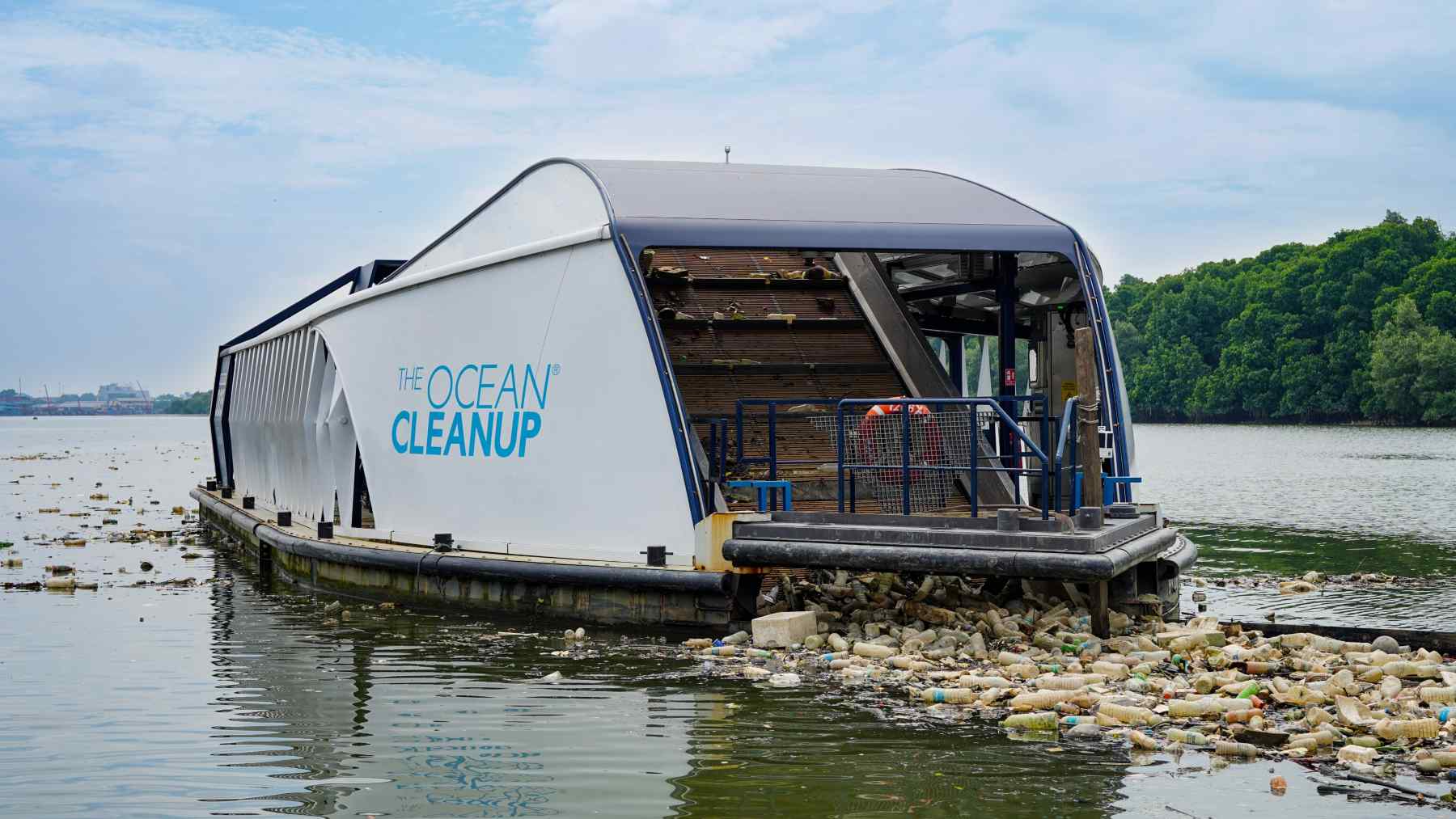
However, they persisted, and the ocean-saving robot, also known as the System 001/B, eventually functioned in 2019. After some time, System 002 was completed, and it collected about 20,000 pounds of marine debris in 2021. But cleaning up what’s already out there isn’t enough. A solar-powered, barge-like device called the Interceptor was thus introduced to capture plastic in rivers before it enters the ocean. According to research, eighty percent of plastic pollution in the oceans is caused by just 1,000 rivers. There are currently interceptors in Malaysia, Indonesia, the Dominican Republic, and Los Angeles, and more are planned.
What is the purpose of the ocean-saving robot from Boyan?
Boyan’s goals are ridiculously ambitious: he wants to eliminate half of the Great Pacific Garbage Patch in five years and 90% of it by 2040. More than $30 million has been given to him by organizations like the Thiel Foundation and Salesforce CEO Marc Benioff. In the process, he has also co-authored over a dozen scientific publications and a large number of patents. Boyan won the prize, however, for something he started doing on his own, without a plan, when he was sixteen. Moreover, he will continue to lead The Ocean Cleanup today. Testing and tweaking are ongoing. He is still attempting to drive himself out of business by cleaning up the mess we threw into the water, something that everyone thought was impossible.




