
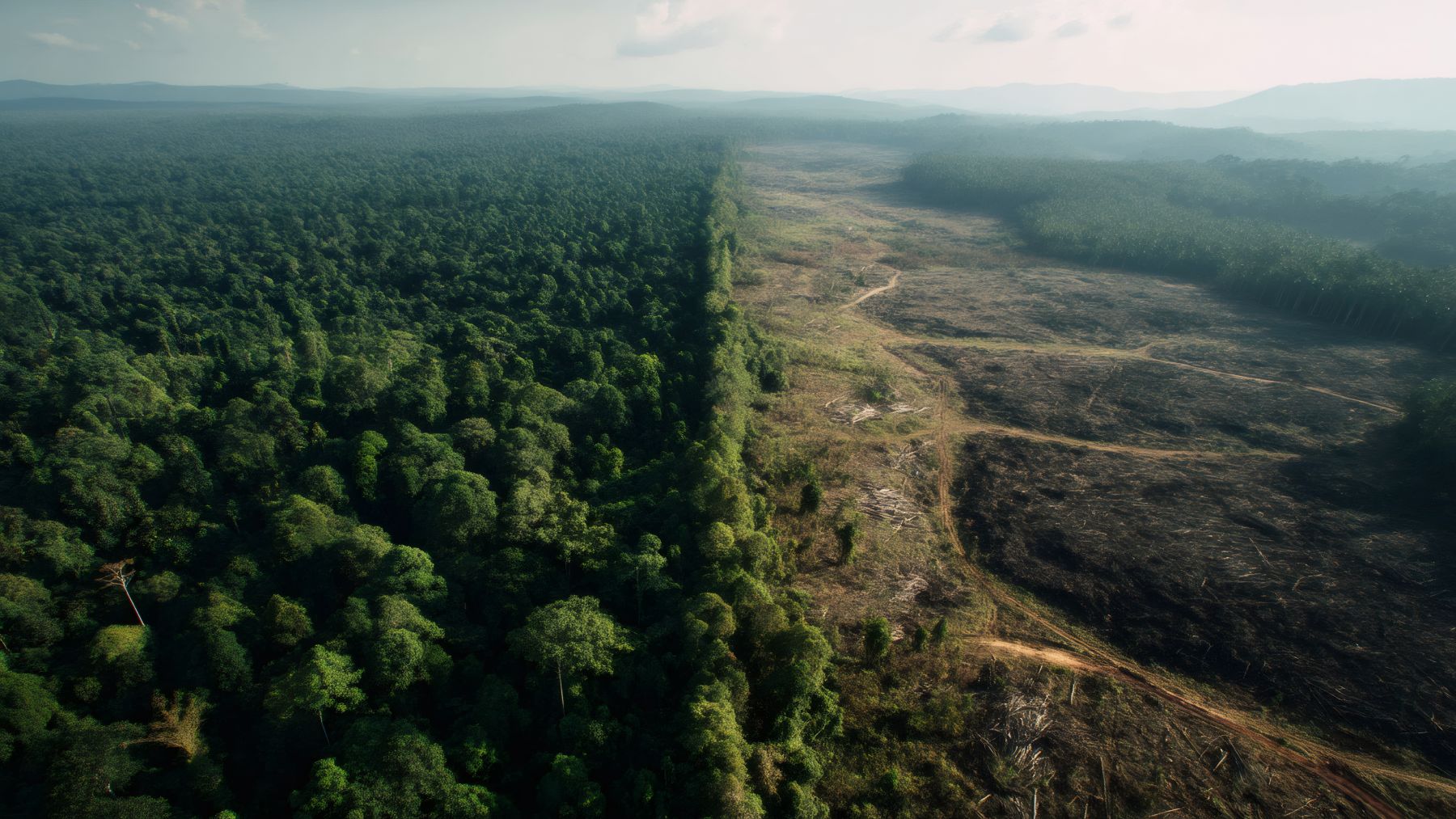
The current situation on the planet is dire. In many, if not almost all, aspects, but if governments continue to fail to invest in the fight against climate change, it will only worsen. Anthropogenic global warming reached 1.36°C in 2024. This raised the average global temperature (a combination of anthropogenic warming and natural variability of the climate system) to 1.52°C. Regarding this, only 25 countries, covering around 20% of global emissions, have submitted their plans, known as Nationally Determined Contributions.
The world has already reached such a high level of warming that it cannot avoid significant impacts
Climate scientist Piers Forster, head of the Climate Change Committee, has expressed concern about the slow progress made by the governments of the main leading countries participating in COP30 and UN. The fact is that the world has already reached such a high level of warming that it cannot avoid significant impacts from climate change. We find ourselves in a very unfavorable situation.
These data come from the third annual ‘Global Climate Change Indicators’ report, conducted by a team of more than 60 scientists from 17 countries and published this Thursday in the journal ‘Earth System Science Data’. “Our third annual ‘Global Climate Change Indicators’ show that both the levels and rates of warming are unprecedented. Record greenhouse gas emissions mean that more and more of us are suffering the effects of climate change at dangerous levels,” according to Piers Forster.
Staying within the 1.5°C limit is necessary to avoid the worst impacts of climate change
The report presented by the experts not only addresses this significant increase for the future of the Earth and, consequently, for humanity. The report also analyzes how extreme temperatures and precipitation are intensifying, how much sea level is rising, and how much carbon dioxide could be emitted even before the planet’s temperature exceeds pre-industrial temperatures by 1.5°C. This is important, as staying within the 1.5°C limit is necessary to avoid the worst impacts of climate change.
“At a time when the EU is considering weakening its 2040 greenhouse gas emissions reduction target, our report shows that the pace of climate change continues unabated. Now is not the time to back down; Europe must take the lead in decarbonization,” said Chris Smith of the Free University of Brussels (Belgium).
This report offers an overview of the state of the climate system, like an X-ray of the health of planet Earth
And if we look at the data, between 2015 and 2024, the global average temperature was 1.24 degrees Celsius higher than in the pre-industrial era, as we mentioned earlier. Of this figure, 1.22 degrees Celsius is due to human activities, which in that decade produced the equivalent of 53 gigatons of CO2 emitted into the atmosphere each year, primarily due to the burning of fossil fuels and deforestation.
This report offers an overview of the state of the climate system, like an X-ray of the health of planet Earth. It is based on calculations of net greenhouse gas emissions worldwide, their concentration in the atmosphere, rising temperatures on the Earth’s surface, and the proportion of this warming caused by human activity. Therefore, it is a report that must be highlighted, as the data is alarming, and scientists have been warning for decades of what would happen if we are experiencing what we are now experiencing.
Extreme summers, as is being seen in Europe, especially in recent weeks with the countless fires raging in forested areas of Spain. Winters are also experiencing very low temperatures, as Argentina has faced, or with heavy and destructive rains, as is happening in parts of Colombia. Africa is also being hit particularly hard by climate change and extreme weather, impacting lives and livelihoods. Finding a solution is not an option; it is a priority.




