
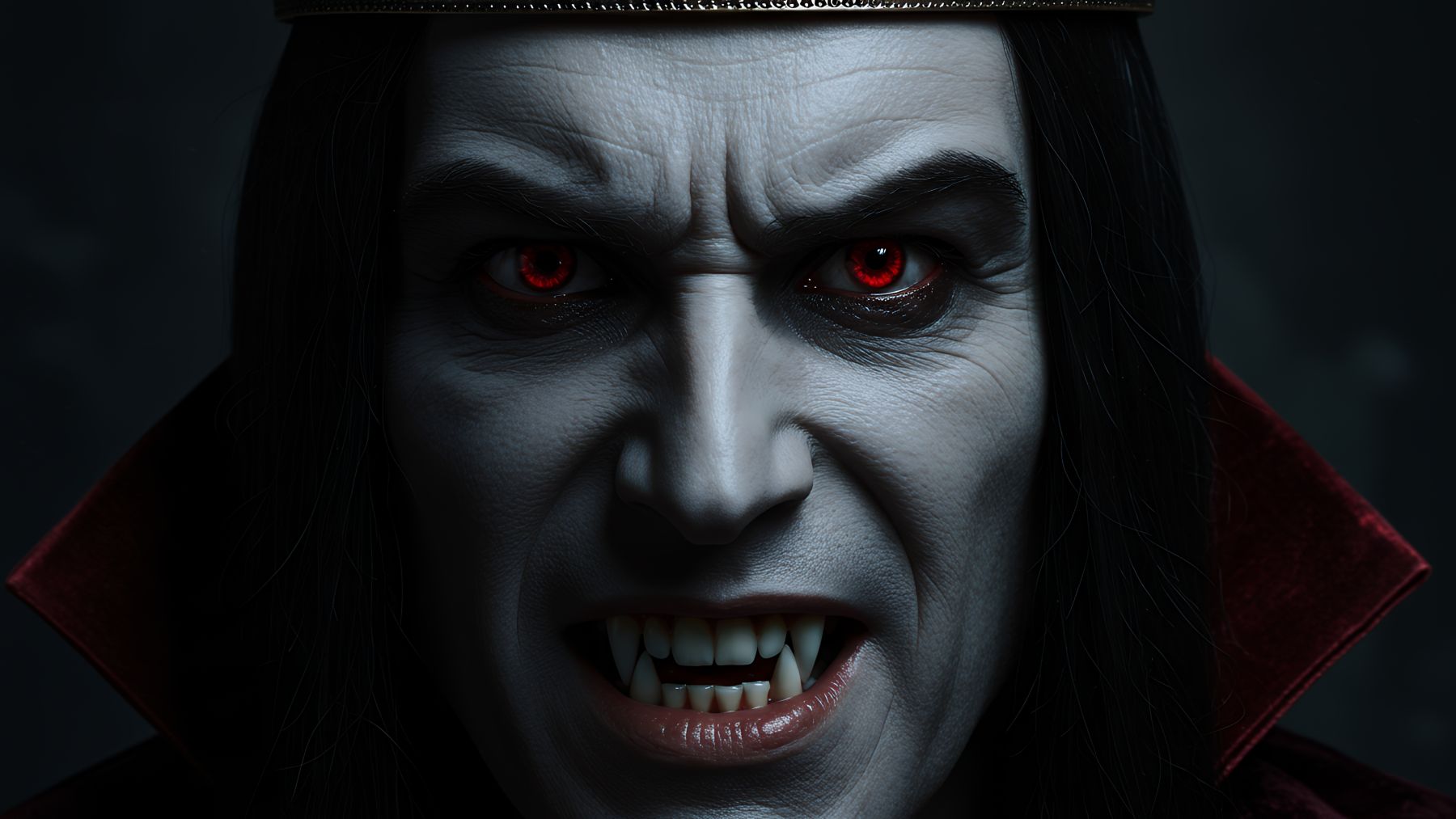
We enter a new world. That of the history of vampires as it was ‘truly’ understood in the past. In his essay “Killing the Dead: Vampire Epidemics from Mesopotamia to the New World” (2025), John Blair debunks the more literary and somewhat idyllic view of vampires. The essay addresses the harsher, more anthropological terrain of the vampire figure. Not Dracula, but what a “real” vampire meant.
What characterizes a vampire in historical tradition is the fact that it is a corpse that comes back to life
Everything centers on one statement: the fear of the dead coming back to ‘life.’ This has always been one of the greatest fears of humankind, heightened this time by the fact that, unlike ghosts, vampires have bodies, and for this reason, according to the information we have, they must undergo physical rituals of neutralization. That is the greatest ‘fear.’ Blair insists that what characterizes a vampire in historical tradition is the fact that it is a corpse that comes back to life.
During the 18th and 19th centuries, many claimed to have seen corpses with vampiric signs, but according to research, almost all of the supernatural phenomena described have a scientific explanation. Interest in vampires owed much to the Benedictine Augustin Calmet, author of A Treatise on Vampires (1751). Calmet defined vampires as “dead […] who rise from their graves and come to disturb the living, suck their blood, appear to them, cause a racket at their doors and in their houses, and, finally, often cause their death. One can only free oneself from their manifestations […] by digging them up, cutting off their heads, impaling them, burning them, or piercing their hearts.”
Blair interprets these beliefs as a collective response to social crises and anxieties
Stories that people made real, since in this sense, the vampire is conceived as a material threat, understanding why, during the 18th and 19th centuries, a plague of vampirism swept through Europe. As Rousseau already stated in 1762, there was no history in the world as well documented as that of vampires. In many societies, corpses that had not received a proper burial, those who died violently or belonged to groups considered witches, criminals, and foreigners were perceived as restless dead, prone to return. Blair, in her study, interprets these beliefs as a collective response to social crises and anxieties.
In this sense, there have always been skeptics, such as Rousseau himself or the writer Charles Nodier, who in 1822 wondered how rational individuals could have believed in “the most absurd of all popular errors.” And the reality is that the stories told were closer to what Calmet said about bodies: “When they are dug up, their bodies are whole, their blood red and fluid, and their limbs supple and manageable.” And as studies point out, this has a scientific explanation. The preservation of an incorrupt body occurs through two well-known phenomena: mummification—which takes place in a dry, warm environment—and saponification, which occurs when the corpse is in a cold, humid environment, common in Central and Eastern Europe.
This is a fundamental contribution to historical anthropology studies
The ambitious historical survey of this study, which ranges from Mesopotamian civilizations to nineteenth-century New England, aims to shed light on a very important part of history, one dominated by dark stories, myths, and rumors of what could be and what could not. Blair’s work, published in September 2025 by Princeton University Press, is shaping up to be a fundamental contribution to historical anthropology studies. Rather than cataloging traditions and practices that may seem exotic, Blair seeks to understand what vampires reveal about us and our societies—especially about the dynamics of a society with so many twists and turns.




