The idea of using more eco-friendly products for home cleaning is becoming more and more common. For this reason, some tips and tricks are becoming popular on how to clean stains, especially in the bathroom, one of the least favorite places to clean in the home. This is achieved by mixing vinegar, baking soda, and citric acid in a container, according to Jacqueline Stein, professional cleaner and owner of Home Reimagined in Austin, Texas.
This product not only stands out for its descaling, polishing… but best of all, its eco-friendly nature
Citric acid is an element found in lemons; it’s very versatile, which is why it has become essential when it comes to cleaning and disinfecting. This product, perhaps the least recognized of the ingredients described in this article, not only stands out for its descaling, polishing, limescale-removing, preserving, and unclogging properties, but best of all, its eco-friendly nature.
Keep in mind that hard water stains, rust, and mold may require different cleaning methods
It’s very important, according to experts, that even if this mixture is a success, you still have to consider the type of stain. Some cleaners may be too harsh for certain finishes, or the stains may require special treatment depending on the cause. It’s also important to keep in mind that hard water stains, rust, and mold may require different cleaning methods. “For example, hard water stains are usually caused by minerals present in the water and may require an acidic cleaner, or even a pumice stone, while rust may require a more specific product for iron deposits,” explains Stein.
Minerals like calcium and magnesium can adhere to the surface over time, especially in areas with hard water
There are several ways to mix the products for each stain. For example, you can also remove limescale and general dirt from the shower head with citric acid. To do this, unscrew it and immerse it in a container with 1 liter of water and 100 g of citric acid. Then add a tablespoon of baking soda. Let it sit for an hour. Finally, replace it and turn on the hot water to remove all impurities.
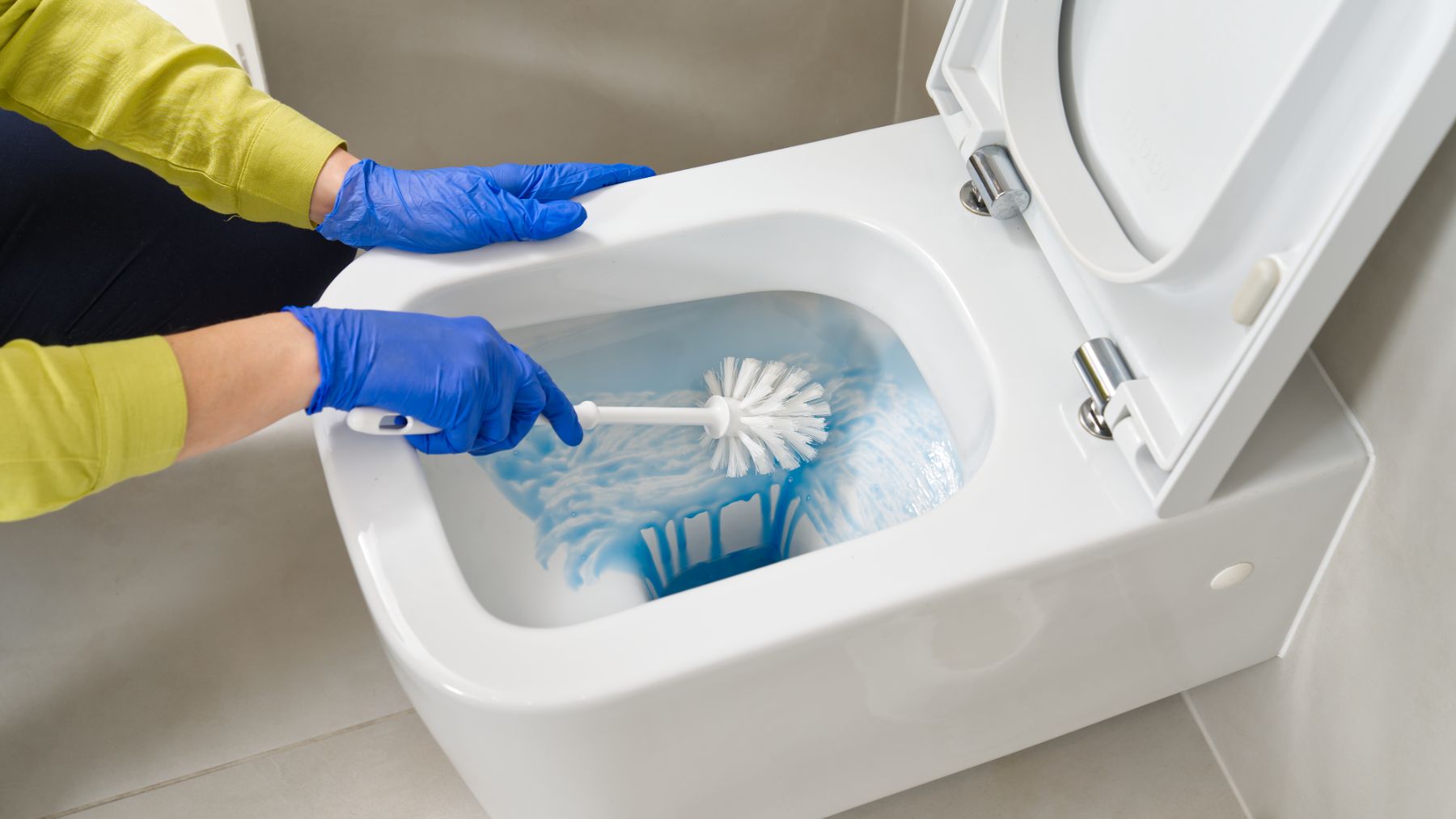
And as the expert explains, the most common cause of tough toilet stains is hard water buildup. Minerals like calcium and magnesium can adhere to the surface over time, especially in areas with hard water. This is why certain surfaces can sometimes be so difficult to clean. “You may also notice stains in the toilet simply from not flushing the toilet enough, if the toilet hasn’t been flushed for several days,” says Jacqueline Stein.
Citric acid is the perfect substitute for caustic soda and other chemical and toxic drain cleaners
Finally, let’s mention that citric acid can also be used to unclog pipes. Citric acid is the perfect substitute for caustic soda and other chemical and toxic drain cleaners. For a clogged drain, there’s nothing better than mixing about 60 g of baking soda with 100 ml of liquid citric acid.
Precautions: make sure you’re in a well-ventilated area when using household or chemical cleaners
Finally, regarding precautions. When using citric acid, it’s important to know that handling it doesn’t pose a health risk, but at high concentrations it can be corrosive, so we recommend wearing gloves. In addition, always make sure you’re in a well-ventilated area when using household or chemical cleaners. And always protect your skin and respiratory tract, if possible. “Some cleaners can be quite harsh, so be sure to read the label’s instructions and warnings,” suggests Stein. “And make sure you know the material of your toilet before using any product to avoid damaging it.” Also, don’t mix products without first consulting an expert.