
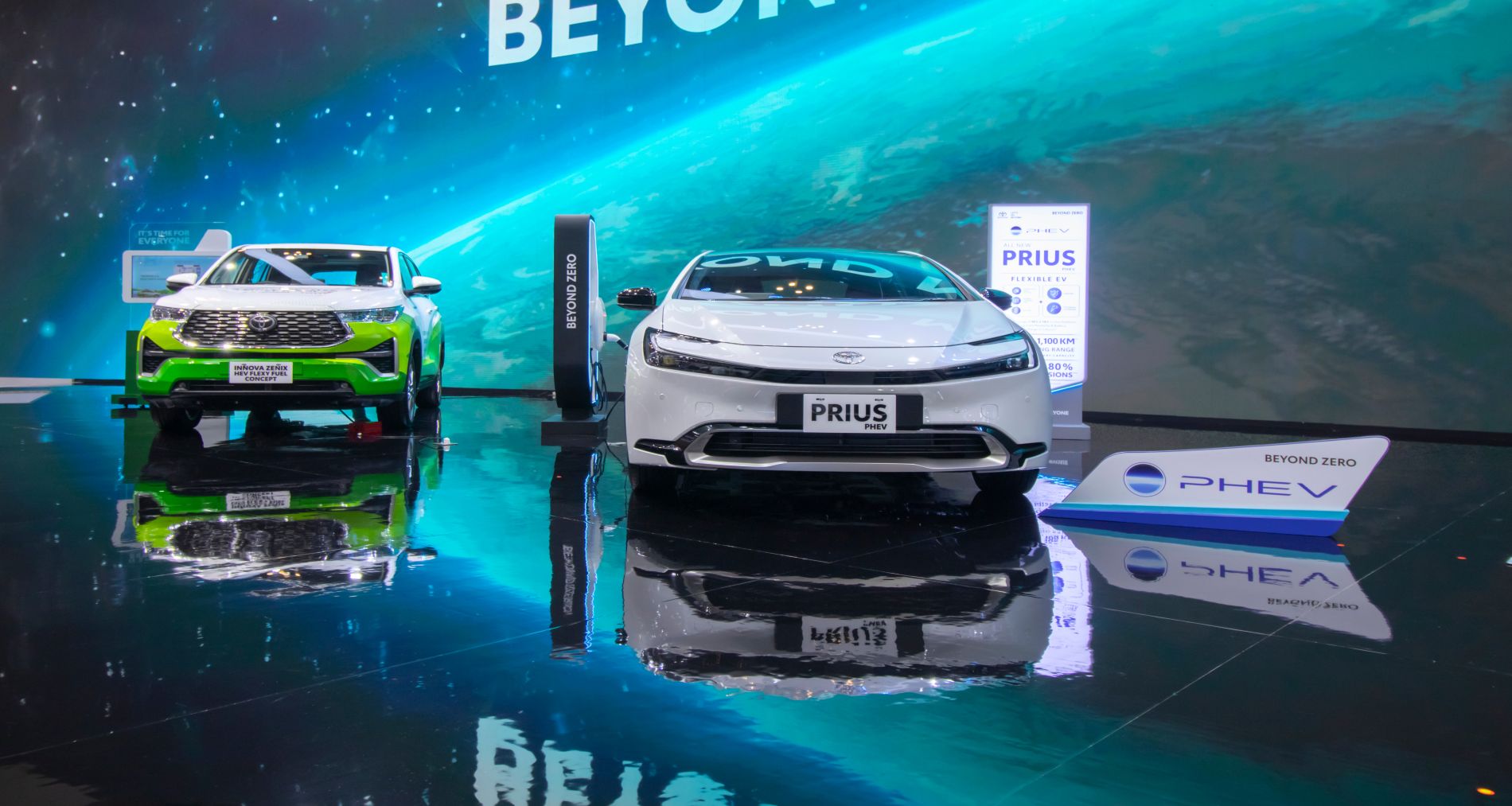
Moving toward a carbon- and pollution-free world is a major concern across all major industrial sectors. Japan is arguably one of the leading countries in renewable energy. Toyota, Subaru, and Mazda are already on the path toward the internal combustion engine (ICE). The Asian country appears to be moving away from the general notion that hydrogen is the most important green fuel.
Toyota introduced a combustion engine designed to run efficiently on environmentally friendly fuels
Internal combustion engines are a type of engine that generates energy through the use of fuel found within the engine itself. This generates gases that, in turn, make movement possible. In 2024, Toyota introduced a combustion engine designed to run efficiently on environmentally friendly fuels. Combined with electric motors, these motors helped the transmission ensure maximum performance and optimal range.
The three automotive giants are joining forces to push Japan to the pinnacle of carbon neutrality. Japan is betting on innovation in this field. Toyota is developing three inline-four engines, Mazda is reviving its legendary rotary engine with the new Skyactiv-Z, and Subaru is perfecting its iconic boxer engine, a design also admired by Toyota. These engines will run on a blend of clean fuels, including biofuels, synthetic gasoline, and liquid hydrogen.
“It’s necessary to take on the challenge of developing engines that are in tune with the energy environment”
In the statement released a year ago, Mazda, Toyota, and Subaru announced the alliance and the role that internal combustion engines would play in the future. All three stated that the companies would seek not only to improve the performance of independent engines, but also to optimize their integration with electric propulsion units, thus leveraging the strengths of each.
On one hand, Koji Sato, CEO, President and Member of the Board of Directors of Toyota Motor Corporation said: “To provide our customers with diverse options to achieve carbon neutrality, it is necessary to take on the challenge of developing engines that are in tune with the energy environment of the future.” Meanwhile, Masahiro Moro, Mazda Motor Corporation CEO, president, and representative director said: “We will continue to offer customers exciting cars by honing internal combustion engines for the electrification era and expanding the multi-pathway possibilities for achieving carbon neutrality.”
Malaysia is innovating with methanol
Other countries such as China and Malaysia are also investing in greener fuels. In fact, Malaysia is innovating with methanol, while Japan has focused on bioethanol and its derivatives. It is obtained from plant materials such as sugarcane or residual biomass. Thanks to bioethanol’s ease of transport and its increasing production, Japan appears to be reinforcing its interest in this material. This alternative is cleaner and does not pose any environmental damage if obtained sustainably and in an environmentally friendly manner.
Let’s remember that Japan is one of the top 10 greenhouse gas emitters, so the need to erase its carbon footprint is urgent. Japan has already announced its goal of reducing emissions by 60% by 2035 and 73% by 2040. What is clear is that investment in research must be significant if these percentages are to be achieved.




