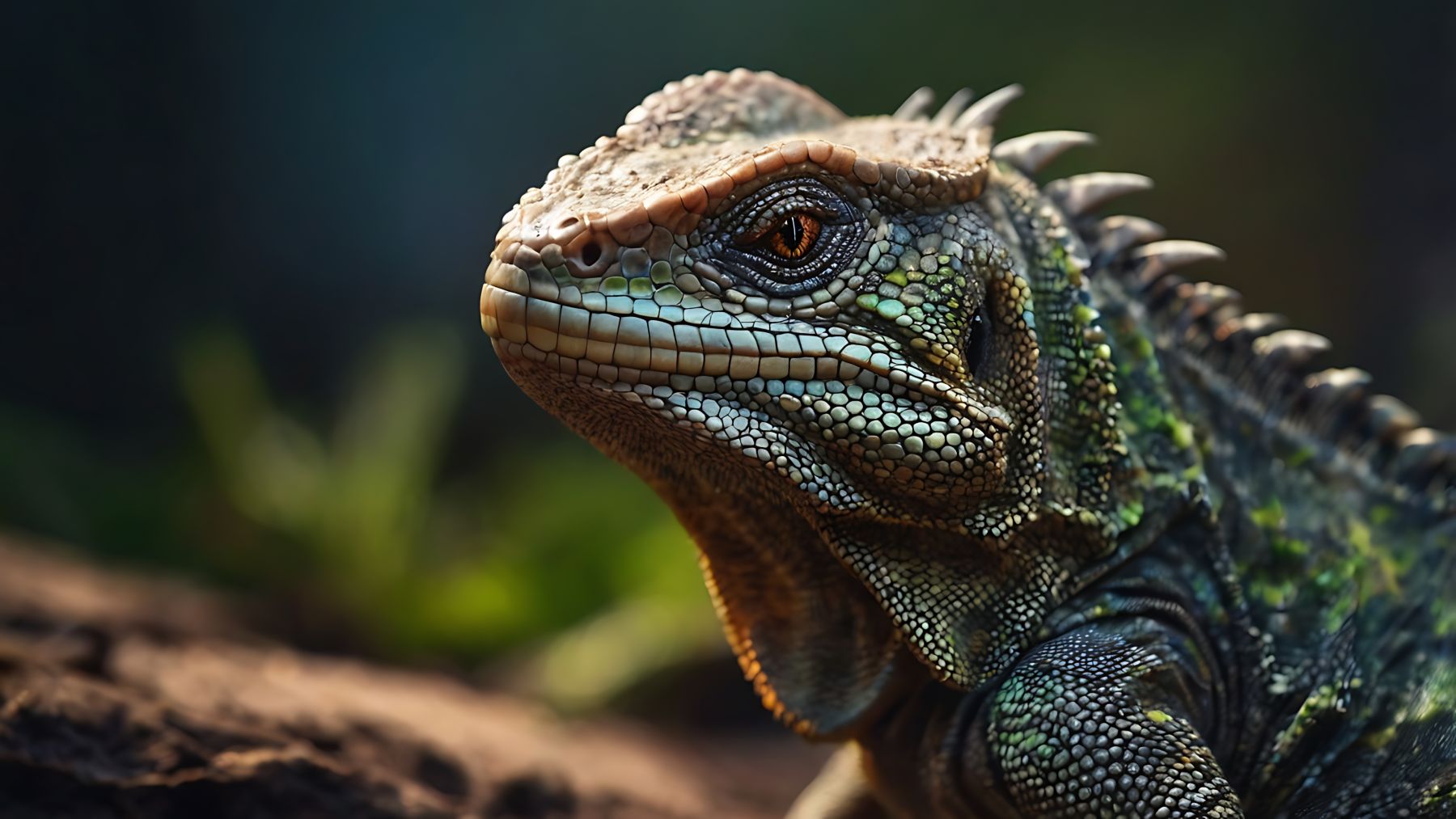
Investment in research serves, among other things, to advance this type of discovery. A small fossil dating back 240 million years, predating the dinosaurs, is believed to be the oldest member of the lepidosaurs. A study led by the University of Bristol (United Kingdom) and published in Nature describes this fossil, which is between 3 and 7 million years older than the oldest known lepidosaur, Wirtembergia. Lepidosaurs are a group that includes lizards, snakes, and the only living member of the order Rhynchocephalia.
This animal has retained a very similar appearance to its Mesozoic ancestors
Going into detail, lizards belong to the most species-rich group of terrestrial vertebrates, the lepidosaurs, which includes around 12,000 species of lizards and snakes (Squamata), as well as a single species of rhynchopaenids, the New Zealand tuatara. This animal, despite the passage of time, has retained a very similar appearance to its Mesozoic ancestors. According to Michael Benton, vertebrate paleontologist at the University of Bristol, “The new beast has relatively large, triangular teeth and probably used them to pierce and cut the tough cuticles of its insect prey, much like the tuatara does today.”
The characteristics suggest that the reptile was a specialized insectivore that hunted large, fast-moving prey
This find presents some of the oldest characteristics of lepidosaurs. This new fossil “shows almost nothing of what we expected,” neither teeth on the palate nor signs of articulation, explained Dan Marke, one of the authors of the article, in a statement from the University of Bristol. These characteristics suggest that the reptile was a specialized insectivore that hunted large, fast-moving prey, such as cockroaches and grasshoppers. The new discovery has been named ‘Agriodontosaurus helsbypetrae,’ which means fierce-toothed lizard from the Helsby Sandstone Formation, the Middle Triassic rock where it was found on a beach in Devon, UK.
“This specimen also reinforces the growing understanding that the tuatara belongs to a once-diverse order of ancient reptiles with a rich evolutionary history”
Another interesting fact is that the fossil dates back to the Middle Triassic, just before the appearance of the dinosaurs, and since then, lepidosaurs have diversified in several stages. “This specimen not only provides important information about the ancestral skull of all lepidosaurs, but also reinforces the growing understanding that the tuatara, although often referred to as a ‘living fossil,’ belongs to a once-diverse order of ancient reptiles with a rich evolutionary history,” says Marke.
A type of reptile that was once very diverse and has a rich evolutionary history
The data provided by this discovery answers many questions and opens the door to new evidence of what life was like before the dinosaurs. This specimen not only provides important information about the ancestral skull of all lepidosaurs, but also adds to the growing knowledge that the tuatara, although often referred to as a “living fossil,” belongs to an order of ancient reptiles. A type of reptile that was once very diverse and has a rich evolutionary history. Another interesting fact is the size of its teeth, which were surprisingly large.
Their incredible ability to capture insects and other prey using a variety of extraordinary adaptations
Finally, researchers have also been able to conclude that they had a great hunting ability. One of these characteristics is their incredible ability to capture insects and other prey using a variety of extraordinary adaptations, including their highly flexible jaws and, in the case of some snakes and lizards, the use of venom. A discovery that has certainly surprised the scientific community, which finds in this type of study precise ways of understanding things that are impossible to access.