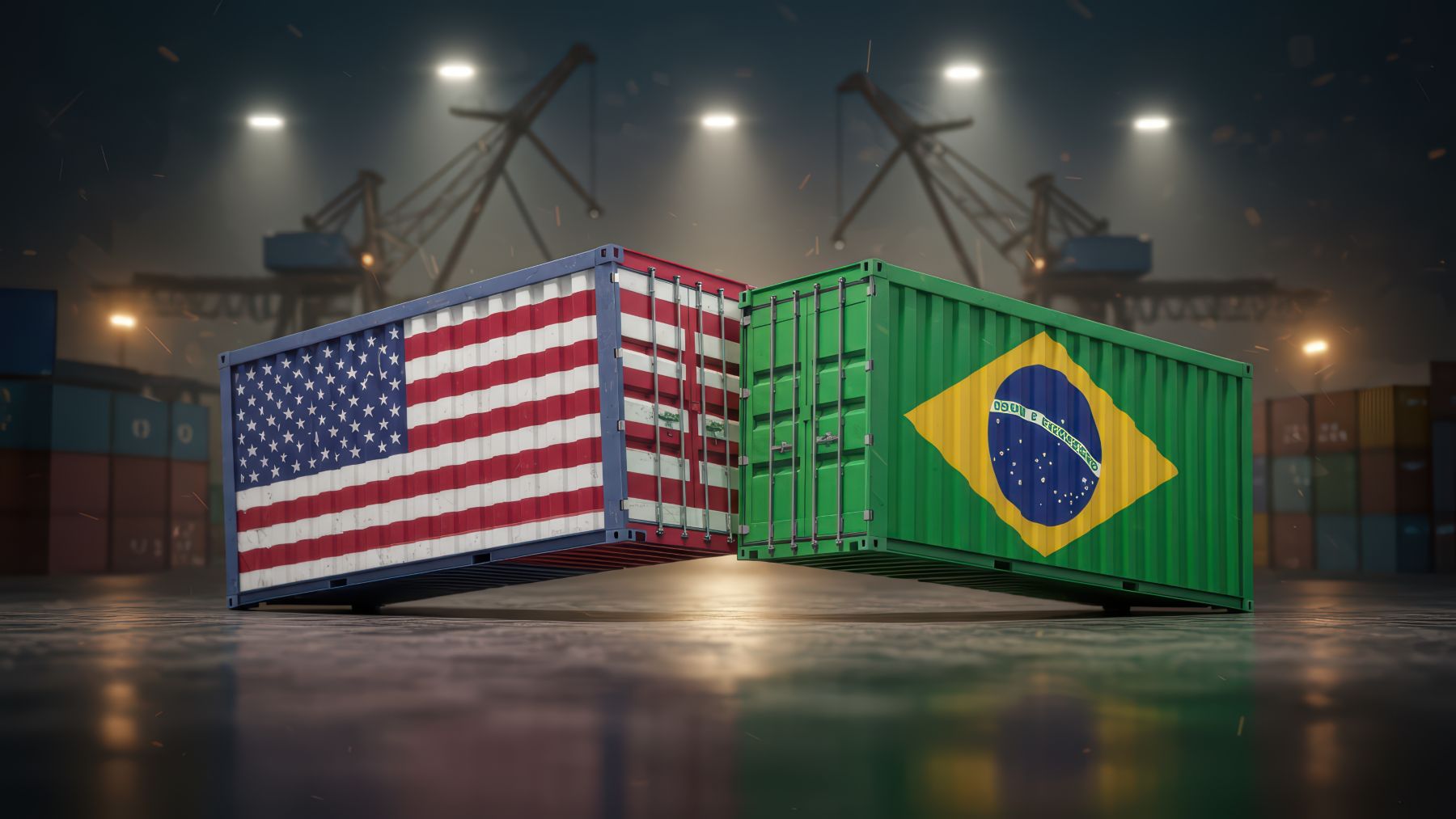
The tariff war has put the world in a bit of a pickle. One of the countries hardest hit by the Trump administration’s tariffs has been Brazil. The US President imposed 50% tariffs on Lula da Silva’s country. The deadline to reach an agreement with the United States was August 1; if there was no bilateral agreement between the countries and the Trump administration, the tariffs stipulated by the country would automatically apply. No agreement was reached with Brazil, although Trump recently said he was willing to talk with the South American country.
Donald Trump has accused Lula’s current administration of human rights violations
As is well known, this all comes after the high-profile trial in Brazil against Jair Bolsonaro, who is accused of an attempted coup. Donald Trump, who has demonstrated a close relationship with the former Brazilian leader, has accused Lula’s current administration of human rights violations and has strongly attacked the country’s government. This is the main reason for the 50% tariff increase.
Let’s remember that this 50% tariff imposed by Donald Trump applies to the country, but with 700 exceptions, so it can be deduced that the reprimand is more of a political punishment than an economic one. As of August 1, copper tubes, cables, and semi-finished sheets began to receive a 50% tariff. This metal, essential in products such as electronics and vehicles, already represents a significant portion of US imports.
Trump: “Lula can call me whenever he wants. We’ll see what happens”
As we recently reported, during a press conference at the White House, Donald Trump said, “Lula can call me whenever he wants. We’ll see what happens; I love the people of Brazil.” What the American leader is suggesting is that his economic and commercial interests with Brazil are evident, and despite attacking Lula, he still wants to negotiate and reach an agreement.
In response to this message, the Brazilian president said: “We have always been open to dialogue […]. We are currently working to protect our economy and respond to the US government’s tariff measures.” This message was conveyed via social media, as is customary today for politicians to communicate. It should be remembered that Lula da Silva and Donald Trump have never had a face-to-face meeting, and according to reports, an attempt is being made to reach an agreement to hold talks by telephone.Lula da Silva recently said on EFE that, if the talks take place, “We want to be respected for our size. We are not an insignificant republic.”
South Korea tariffs will be 15% instead of the 30%
One of the agreements reached recently, specifically to avoid tariff increases, was between the Trump administration and South Korea. Both countries sat down to talk and reached an agreement that tariffs would be 15% instead of the 30% initially proposed by Donald Trump.
And one more point worth remembering. There was a kind of legal loophole, called the “de minimis exception,” a small concept through which US citizens could make “small” purchases of up to $800 online from Chinese stores, namely Shein and Temu, without incurring any tariffs. This exception was eliminated this week. Therefore, US citizens and residents will see higher prices for products coming from countries on which the Donald Trump administration has imposed tariffs.
The possible pending talks with Lula da Silva would change the actual situation
We’ll have to keep an eye on his moves, because with the recent US agreement with South Korea and the possible pending talks with Lula da Silva, everything is a bit up in the air. Let’s remember that even if Trump wants to impose tariffs on “every” country, there are many commercial interests that cannot be broken, otherwise it would end up weakening a certain part of the US economy, so Donald Trump’s moves are carefully monitored.