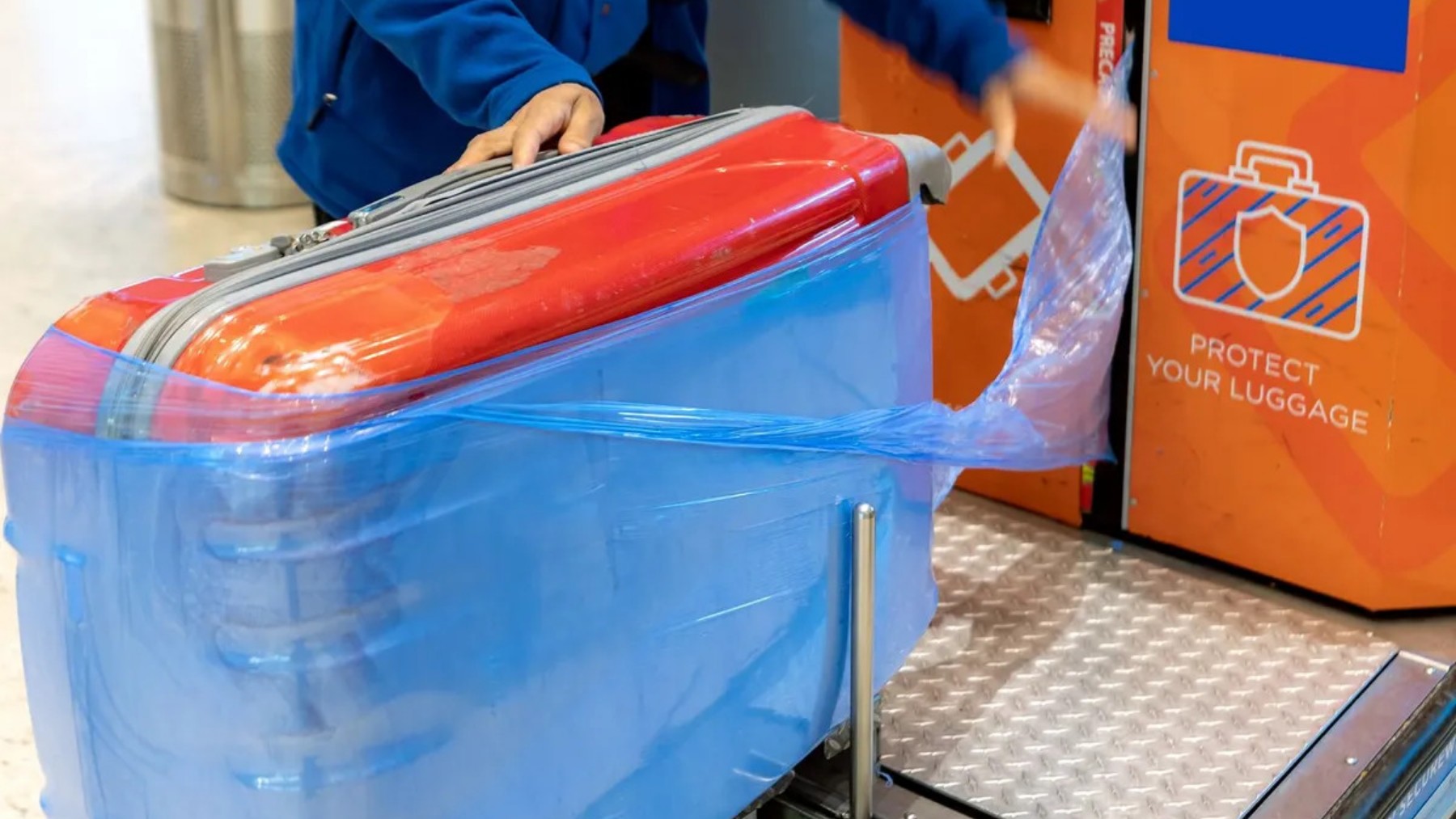
In the United States, some passengers choose to pay for the baggage wrapping available at airports when they travel. The reasons may vary from protecting luggage, securing it if zippers are broken, preventing them from being stained by disinfectants used at some airports and even preventing them from being opened. However, for the sake of airport safety, if TSA suspects that your bag may be in violation of air safety regulations, they will open it without exception.
Transportation Security Administration (TSA)
The Transportation Security Administration (TSA) is one of the agencies of the United States Department of Homeland Security, responsible for managing systems and methods of safety in transport; airports, metros and railways. Born after the attack of 11-S with the purpose of strengthening the security of these strategic points and large influx of people.
Wrapping your luggage
Have you ever seen the stalls located in the departure area of airports that offer plastic bag wrapping service? Are you one of those who consider it a must when traveling? While some people consider it a silly and unnecessary cat, there are many others who do not travel if their suitcase is not lined. It is not a new practice, but a service that has been offered at airports since the early 1990s. Hundreds of workers in charge of wrapping your suitcase are today employees of the company Secure Wrap, which is present in more than a dozen airports in the United States. They can also be found at airports around the world.
Reasons for wrapping
The effectiveness of wrapping your suitcase in plastic like a sandwich for recreation will depend on your preferences. Travelers argue several reasons for choosing it:
- Prevent your suitcase from being opened by thieves or airport officials. It is well known that some airports are known to accumulate cases of forcibly opened suitcases, from which items or valuable clothing have mysteriously disappeared and can never be recovered.
- Other more extreme cases, but which also cause uncertainty in the travellers is the well-known “lag-lag bala” method. The airport crossing the line carrying out this deplorable practice is Ninoy Aquino International Airport, in Manila, where airport staff put bullets in luggage and later threaten to arrest the owner if he doesn’t make a cash payment.
- Other passengers opt for this measure to prevent their bags from being spoiled by spraying with insecticides, sprayed in some airports such as Australia or China.
- The most practical is the choice of those who have inherited the suitcase from their great-grandparents, and probably will not make it to the destination.
TSA and wrapped luggage
Whatever reason you choose to wrap your suitcase, none is above the Transportation Security Administration (TSA). Only 5% of the bags are opened for registration. If your luggage is within that percentage, it will be opened without any consideration. In addition, the TSA will not rewrap it, so the money invested will have been in vain (although some companies guarantee a refund if this happens).
Other alternatives
There are airports where you will not be able to find these points of wrapping luggage in plastic, precisely because of the material used. The waste generated is enormous, which has a negative impact on the environment. But don’t worry, there are alternatives to ensure the safety of your bags. Use of TSA-approved locks to prevent them from being opened. Buy reusable fabric or plastic covers to line your suitcase; you only have to pay for them once and reuse them as many times as you need. And what about luggage straps? They are also another cheap and useful option.
It should be mentioned that no existing method would prevent the authorities from opening your suitcase if they think it necessary, but at least if you choose one of these alternatives, you will be contributing to the fight to keep our environment clean.
Here you will find other requirements you need to fly in the US!