
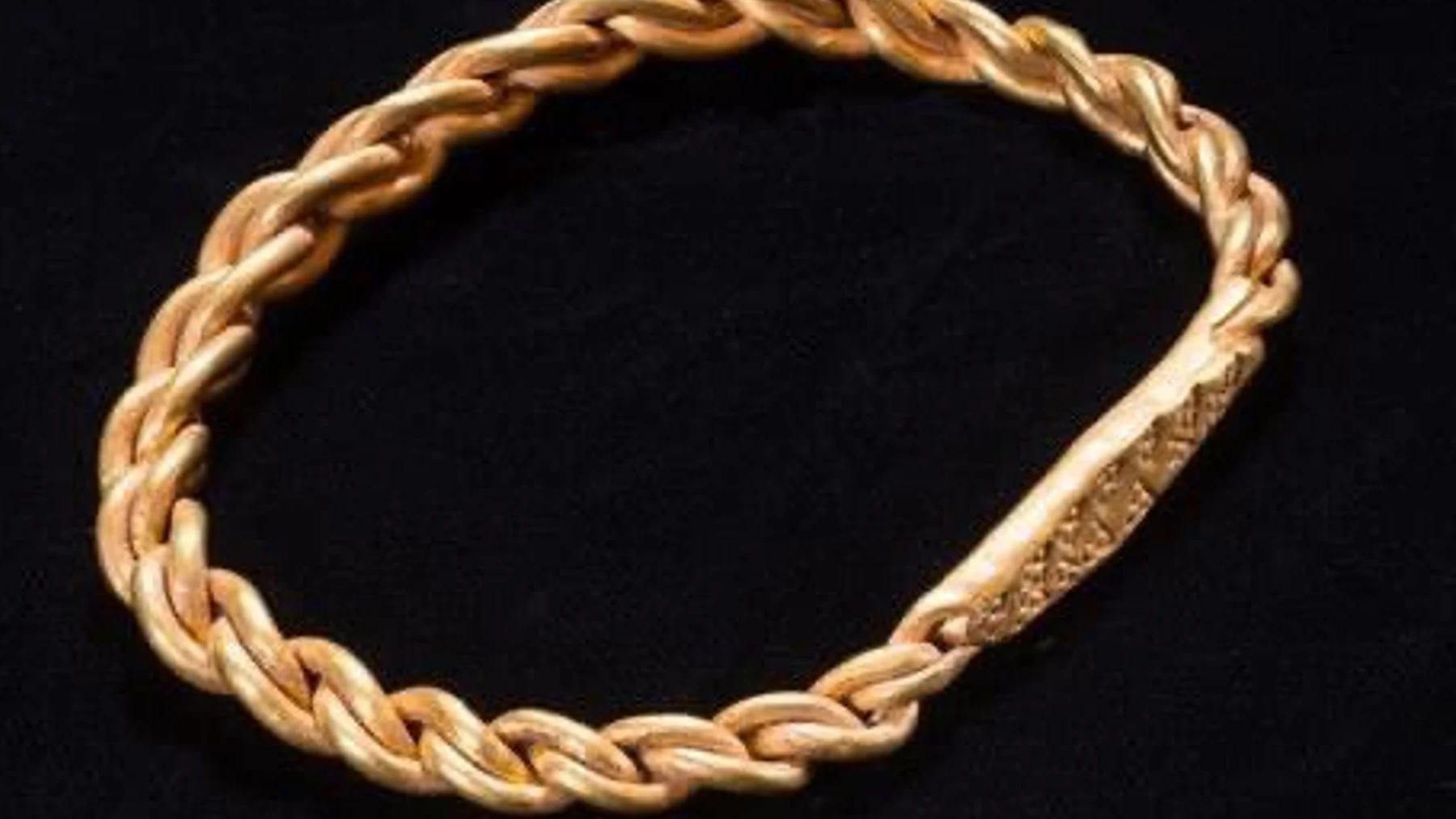
Archeology is in celebration mode after the last archaeological find in Scandinavia. This is an object belonging to the Iron Age, when the Vikings were the protagonists. A lover of medieval history was searching for gold with his metal detector when he found the Viking treasure. This is a flattened piece of a gold bracelet. I couldn’t believe it, Viking gold! An element that adds to our Historical Heritage and draws us the history of our ancestors.
Vikings
Originally from Norway, Sweden and Denmark, the Vikings lived during the Iron Age, from the end of the 8th century to the middle of the 11th century. They were famous for taking part in maritime explorations and opening trade routes. We all have in the collective imagination the image of a tough, tall, barbarian warrior when we think of a Viking. However, they was also a fisherman, craftsman and farmer. They not only populated their regions of origin, but also settled in Iceland, Greenland, Newfoundland, France and Russia among others. Their legacy covers all areas. From the mythology, language, architecture and obvious genetics of many northern European countries.
Historical finds
In the course of history, many discoveries have been made by chance (or not), and they were a step forward in Paleontology and Archaeology. Findings beyond the Vikings, such as remains from the Roman era, Arab legacy in the Iberian Peninsula, bone remains of different types of Homo, among many others. In the case of the Vikings, their legacy is both visible and invisible.
The Isle of Man
The Isle of Man, located in the Irish Sea, is now part of the British Crown. In addition to hosting an important motorcycle race held annually, it is characterized by the presence of medieval castles and its rural landscapes. In it is located the Manx Museum, where we can find elements of Celtic and Viking heritage of the island.
Many jewels from the Viking Age have been found on this island. The researchers claim that the fact that they were underground is not fortuitous. They are believed to have been deliberately buried by their owners, especially during unstable periods. Certainly, they claim that the owners of the jewels intended to recover them, but it was the safest way to protect them from looting.
The latest viking find
The latest discovery of 11th-century Iron Age jewellery occurs on the Isle of Man. The man who discovered the object is called Ronald Clucas, an amateur in search of hidden treasures. Accompanied by his metal detector, he has discovered several treasures throughout his life, but never one as valuable as this. This is a flattened piece of a woven gold bracelet! The protagonist stated “I have been searching for gold for years and found some amazing things, but discovering a piece of Viking gold is truly extraordinary”.
According to Clucas, gold emits very low signals through the detectors, so surprise is guaranteed. This has not been the only finding made on the island. Remains of ships, tools, clothing, weapons and even Viking graves have been found. In addition, Clucas, a member of the Isle of Man Metal Detecting Society, had already made several discoveries in 2005; two silver and lead ingots and Viking coins. What a luck!
Historical legacy
Many discoveries have been made to date, both of the Vikings and of any other civilization, animal or plant species. The importance of these findings is incalculable, since they constitute pieces of the puzzle of our past that, little by little, are taking their place allowing us to understand all the chapters of history.
Want to know what other discoveries have taken place this year? Read here!




