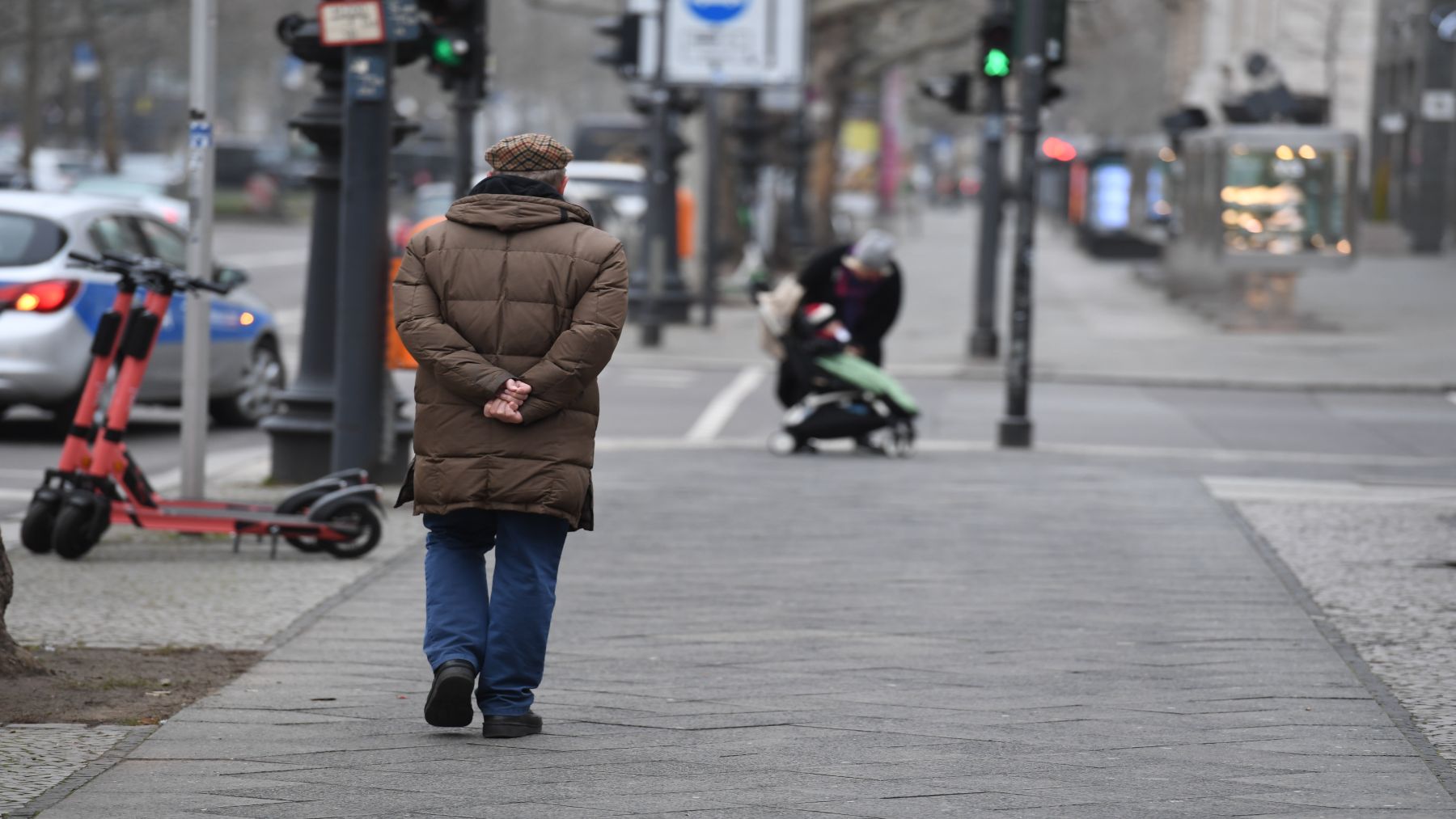
Walking with your hands crossed behind your back is a common gesture. Surely, when you think about it, someone who walks like this comes to mind, or someone you’ve seen walk this way. It turns out that science has determined that walking with this peculiarity can reveal a personality trait. According to psychology, this gesture is a way of creating inner space to think, organize ideas, or process emotions. It signifies self-confidence, introspection, concentration, and even leadership.
Walking with your hands behind your back not only reflects how we move, but also how we gather inward
This posture is common among leaders such as teachers, military personnel, and elders. By placing the hands out of the field of vision and close to the body’s axis, the brain seems to facilitate a state of concentration and recollection. Walking with your hands behind your back not only reflects how we move, but also how we gather inward, seeking calm amidst distraction.
Therefore, unconsciously, this movement functions as a tool to slow down the pace and look inward. It’s a way of standing tall and firm. It’s no surprise, therefore, that it has been observed in historical figures associated with thought, teaching, or contemplation. At the same time, in more relaxed moments, it shows that the person feels comfortable and secure. It’s a nonverbal language that conveys serenity, pause, and a willingness to reflect.
It’s also a posture of thinking, of turning over something in the mind without moving anything but the essentials
The act of walking also brings physical and emotional benefits. Many people, when meditating, adopt this posture to reduce distractions. It’s characteristic of those who are immersed in their thoughts. It’s known to improve cardiovascular health by lowering blood pressure and strengthening the heart. It’s also a posture of thinking, of turning over something in the mind without moving anything but the essentials. Similarly, walking helps control weight, stimulates digestion, and activates the metabolism, becoming a silent ally of our physical well-being.
It’s normal for people experiencing anxiety or stress not to walk with their hands behind their back
It’s not just the gesture itself, but the act of walking itself, which has been talked about a lot. Walking reduces stress, relieves anxiety, and lifts your mood. Walking with your hands behind your back can enhance these effects, as the gesture itself encourages you to walk more slowly and with greater awareness of the present, which promotes a state of sustained calm. In fact, a closer look at details, such as tense arms or very stiff hands, would reveal pressure or stress. In any case, it’s normal for people experiencing anxiety or stress not to walk with their hands behind their back, since when they’re restless, the movement becomes more evident.
Walking with your hands behind your back is one of those behaviors that brings us back to a more human rhythm
When we see someone walking with their hands behind their back, it’s interesting to pay attention to the context. If the person moves slowly, deliberately, how their face is positioned, if they’re stiff, what’s happening around them… All of these things will give us a glimpse into the state they’re in while walking. And perhaps that’s why it’s so common to observe it in different contexts, from an urban park to a school hallway. Walking with your hands behind your back is one of those behaviors that, without intending to, brings us back to a more human rhythm and connects us with ourselves, with our inner thoughts. Hands behind your back means they’re not busy with a phone, social media, a magazine… The protagonists of that moment are your thoughts.