
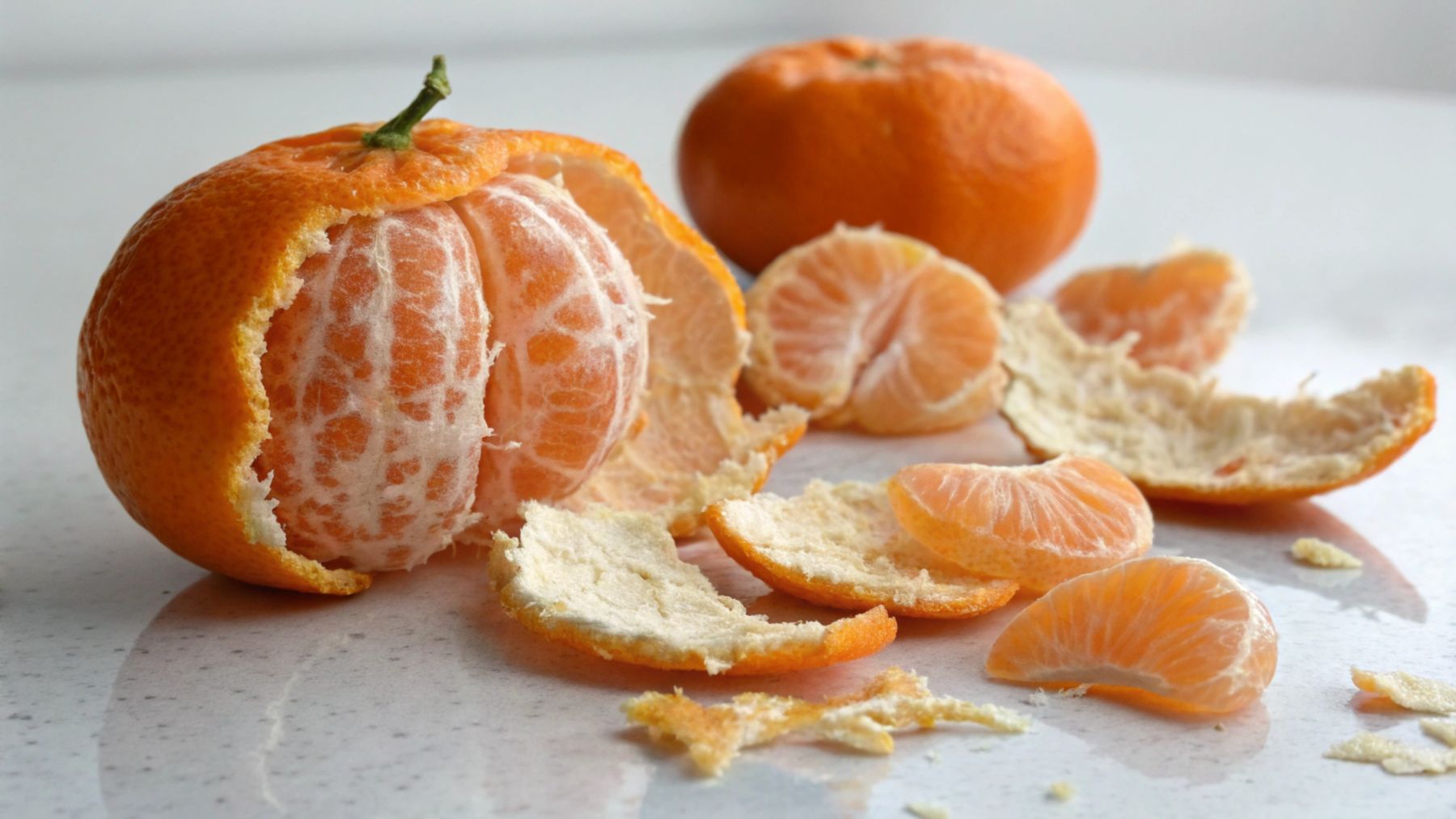
Mandarins are a fruit with almost endless health benefits. This citrus fruit is rich in vitamin C, fiber, and antioxidants, compounds that help strengthen the immune system, improve digestion, and protect the heart. Some people tend to remove the white threads from the fruit, a result that Dr. María Muñoz has published a video on social media in which she says: “That little thread you pull is called albedo, and it’s more important than you think. It’s not there by chance,” and continues to explain: “It’s a natural defense of the fruit: it protects the pulp from insects and microorganisms, reduces oxidation, serves as a nutrient reserve for the development of the fruit, and protects it from solar radiation.”
María Muñoz: “It’s rich in pectin, a fiber that slows the absorption of sugar”
Regular consumption of mandarins can provide numerous health benefits. Their citrus flavor and distinctive aroma make them one of the most popular fruits during seasons like fall and winter. Interestingly, the white thread we mentioned earlier, the albedo, also provides direct benefits to those who consume them: “It’s rich in pectin, a fiber that slows the absorption of sugar,” says Muñoz. These properties are added to those inherent to the fruit itself. Furthermore, it’s very easy to peel and requires no utensils, making it ideal for accompanying meals outside the home.
They are an excellent source of dietary fiber, which is essential for the proper functioning of the digestive system
Simply eating the threads is a way to increase your daily fiber and micronutrient intake, taking full advantage of the benefits that mandarin provides. “It also contains vitamin C and flavonoids that strengthen your immune system and care for your skin and blood vessels. They provide essential minerals such as potassium and magnesium,” says the expert. Furthermore, they are an excellent source of dietary fiber, which is essential for the proper functioning of the digestive system. The combination of vitamin C, fiber, and minerals makes albedo an ally in slowing cellular aging, as well as strengthening the skin and blood vessels.
Albedo, as experts point out, contains up to 20 times more phenolic compounds than the segments, which are antioxidants. They also have a high pectin content, a fiber that helps reduce LDL cholesterol levels in the blood, as mentioned above. According to the Spanish Nutrition Foundation (FEN), these fruits possess a significant amount of provitamin A, especially in the form of cryptoxanthin, a carotene with antioxidant properties.
Mandarins have a high water content, making them a hydrating and refreshing option
So, as experts advise, we shouldn’t remove them; it’s better to eat them. These albedos, common in citrus fruits like tangerines, oranges, and lemons, are also found in other fruits like bananas. In this case, too, it’s best to eat them and not remove them, as it will enhance the fruit’s beneficial effects.
Let’s not forget that mandarins have a high water content, making them a hydrating and refreshing option, perfect for any time of day. Furthermore, choosing fresh, heavy, and firm-skinned mandarins will ensure better quality when consumed. Remember that this is a seasonal fruit, so taking advantage of the months of its production is the best option.
Mandarin and Albedo help prevent cellular aging and promote cardiovascular health
As we mentioned before, the important thing to keep in mind is that mandarin in general, and albedo in particular, help prevent cellular aging and promote cardiovascular health, so consuming the whole mandarin is the best option. Several studies support this theory, one of which is the study “Water-based Extraction of Pectin from Flavedo and Albedo of Orange Peels,” published in 2006 in the Chemical Engineering Journal.




