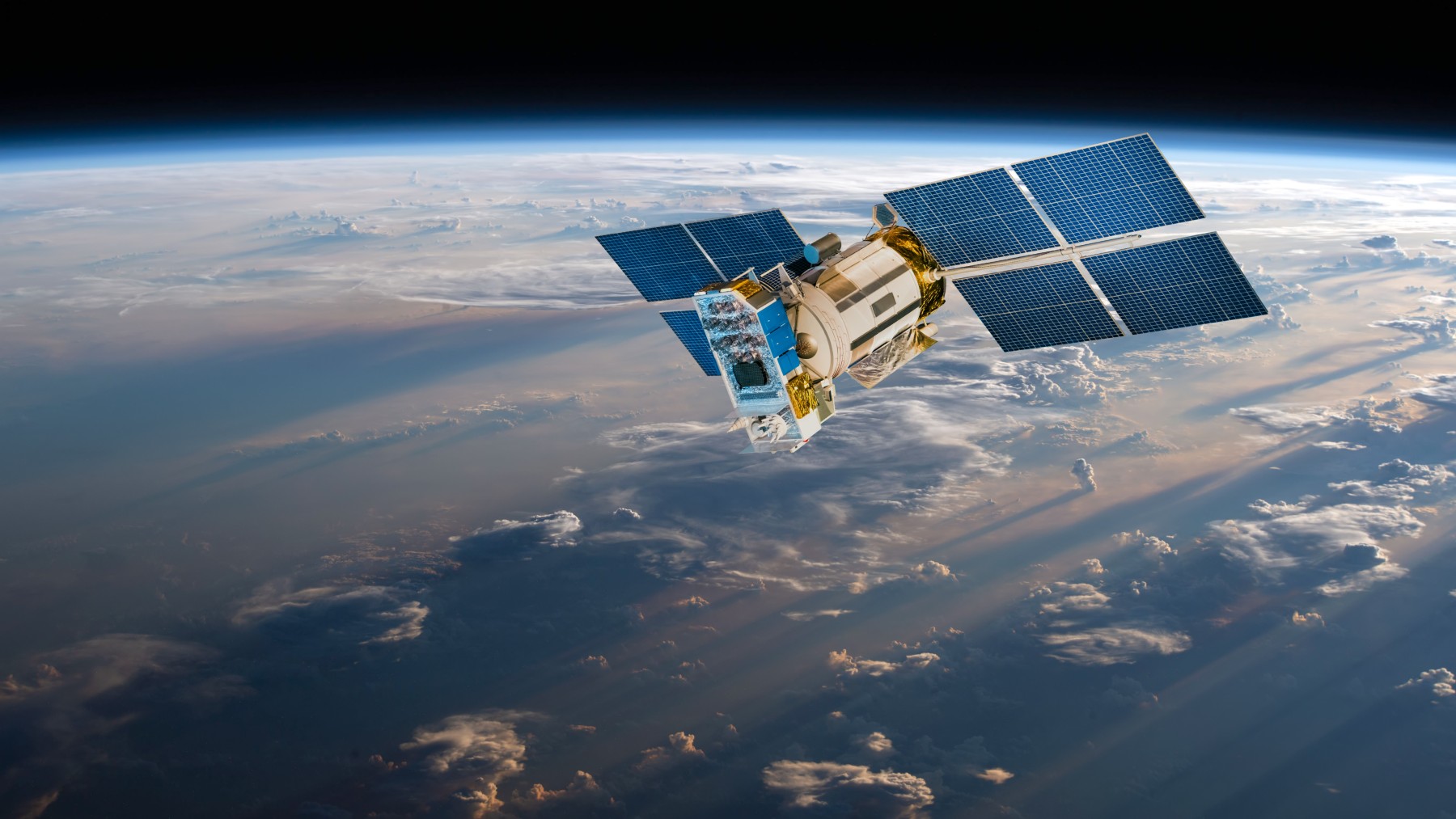
NASA has detected an unknown space signal, which has been termed as a “zombie satellite” in the slang. It’s Relay-2, a satellite launched by NASA in 1964 that has never been seen again. It’s considered space junk and was first detected by astronomers in Australia.
Relay-2’s primary mission was to test communication between ground stations
To go into detail, Relay-2 is a satellite that, as we mentioned, was launched into space by the United States in 1964. It operated for nearly three years until it stopped transmitting a signal in 1967. Relay-2’s primary mission was to test communication between ground stations and map the Van Allen radiation belts. Since its shutdown, it has remained as space debris and, until now, has never been heard from again.
They were able to pinpoint its origin and determine that this something was orbiting the planet
At first, when the signal was detected, scientists didn’t know exactly what it was. It wasn’t until exhaustive data and trajectory analysis was performed that astronomers and experts realized the pulse wasn’t coming from deep space, but from something flying overhead. Thanks to the signal’s precision, they were able to pinpoint its origin and determine that this something was orbiting the planet.
Before knowing what was the ‘zombie satellite’, the options were varied
Relay-2 has been in space without sending any kind of signal for 60 years. Until now, nothing had been heard about it and it was presumed lost, but in 2025, it decided to emit a radio signal sharp enough to confuse astronomers. Before discovering that it was an object lost for decades, the options considered were, on the one hand, that it was a signal generated by the impact of a micrometeoroid. Or, on the other hand, that it was a signal generated by an electrostatic discharge that had accumulated over decades on some metallic object in space. Therefore, the options were, to say the least, varied.
Scientists are wondering if we’re prepared for the vast amount of space junk
This subject continues to fascinate experts and those in the know. This is an object that emitted a signal without being part of any active satellite and without the help of any space station. In fact, Relay-2 had been considered inactive/dead since the 1960s. The surprise has also led to questions. This isn’t the only inactive object in space, so scientists are wondering if we’re prepared for the vast amount of space junk out there.
They can even endanger the search for extraterrestrial life
In this regard, inactive satellites can, for example, collide with active satellites, generating confusing signals that delay or interfere with ongoing research, as occurred with studies of the deep cosmos (Voyager 1, which encountered a wall of fire at 90,000°F). They can even jeopardize the search for extraterrestrial life. These are just a couple of examples of the consequences of these incidents.
The discovery of Relay-2 has also raised certain questions and unfinished business in astronomy. On the one hand, we have debris tracking, as it’s clear that access to more precise, real time systems to monitor what’s happening in orbit is needed. It would also be helpful if satellites could include depressurization and safe disintegration mechanisms. And finally, and perhaps most importantly, international cooperation. No country seems empowered to address this problem alone. Global standards must be shared to address these types of issues. No space agency is immune to encountering a “zombie satellite,” so it’s best to have an action plan.